The anatomy of a sushi omakase, course by course
An omakase looks improvised. The chef decides, the fish changes by the day, and no two meals are quite alike — so it’s easy to read the whole thing as a parade of whatever came in that morning. But underneath runs a fixed architecture. The neta change with the season; the shape of the meal almost never does. Once you can see that shape, an omakase reads less like a tasting menu and more like a piece of music: an opening, a build, and a close, in a deliberate order. (For what the word itself means, see what is omakase?.)
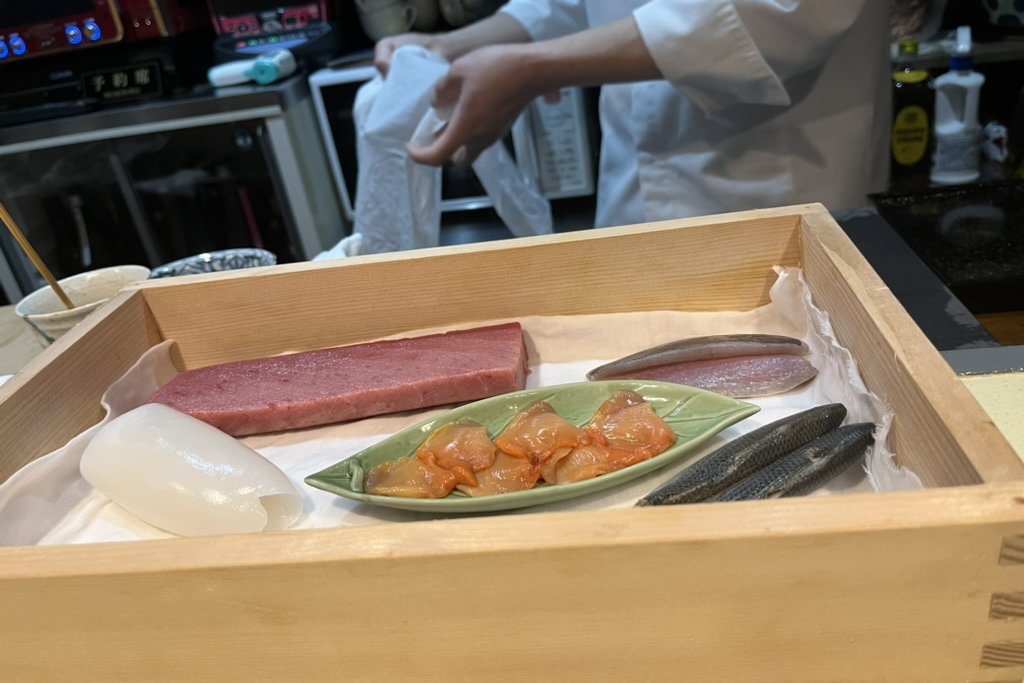
The two acts: tsumami, then nigiri
Most sushi omakase divides cleanly in two. It opens with tsumami (つまみ) — also called otsumami or sakana — a run of small dishes meant to be eaten with chopsticks and, usually, a drink. Then it turns to nigiri (握り), the hand-pressed sushi that is the point of the meal.
Some counters keep the two acts strictly separate; others alternate, sending nigiri and tsumami back and forth in a style regulars call nigiri ryōdate. But the underlying grammar is nearly universal: ease in with cooked and dressed dishes, then march through the nigiri. A few purist counters — Sukiyabashi Jiro most famously — skip the tsumami almost entirely and serve nigiri from the very first piece. That’s the exception that proves the rule.
The opening: tsumami
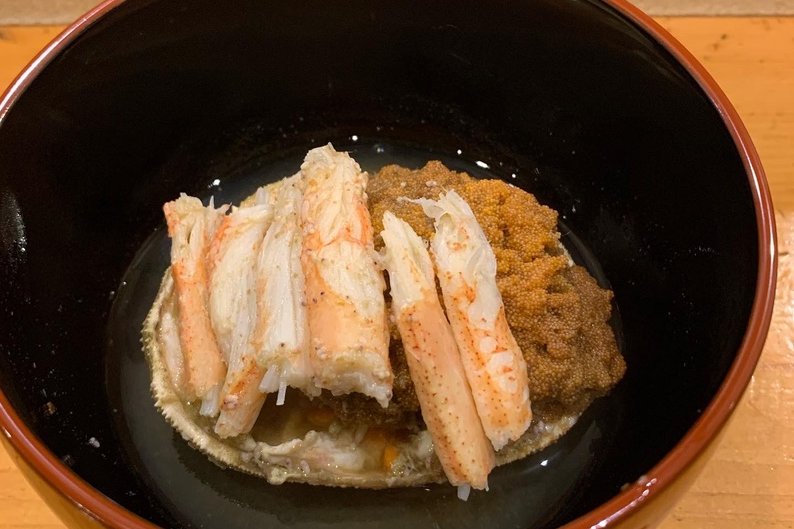
The tsumami are where the chef shows his washoku hand — the part of the meal that looks least like “sushi.” Expect some mix of a little sashimi, something simmered (nimono) like octopus or abalone, something grilled (yakimono), a vinegared or dressed plate (sunomono), and, in season, the luxuries: shirako in winter, ankimo, karasumi, steamed abalone with its own liver sauce, a spoonful of uni — and, in the cold months, snow crab.
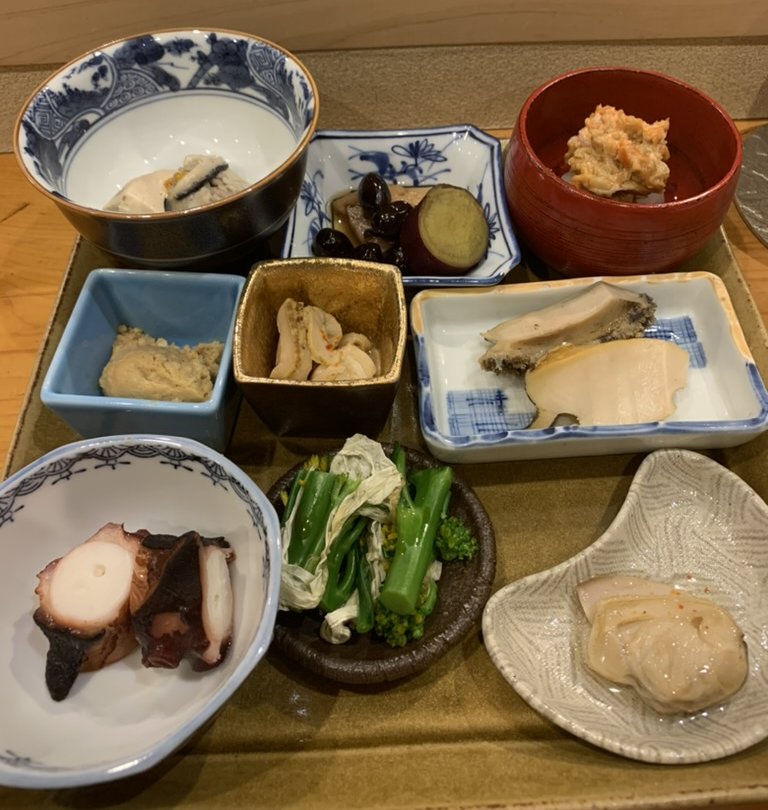
Two things are happening here. The kitchen is showing range beyond the rice — and the format is handing you the natural window to drink. Most people pair the tsumami with beer or sake and ease off once the nigiri begins. (More on that in sake at the counter.) Even within this opening act, the dishes tend to move from light and clean toward warm and rich — the same logic that will govern the nigiri to come.
The turn
Between the acts there’s usually a small reset: a fresh oshibori, a pour of tea, a few slices of gari (pickled ginger) set within reach. Gari isn’t a topping — it’s a palate-cleanser to take between pieces. From here the rice arrives, and the meal changes gear.
The nigiri arc
This is where the structure is most deliberate. The nigiri are sequenced — almost always — many people argue that “from light and lean toward rich and fatty, so each piece sets up the next and nothing earlier is overwhelmed” should be the principle, but in reality you will see many well-known restaurants serve Kohada or Tuna even before the white fish. The first piece is the piece that the chef is having the most confidence with. A typical arc runs will have this:
- White fish (shiromi) first. Hirame (flounder), tai or kasugo (sea bream), sometimes ika (squid). Delicate, clean, low in fat — the palate is fresh, so subtlety registers.
- Hikarimono. The silver-skinned, vinegar-cured fish: kohada above all, plus aji, sayori, sanma, iwashi. Kohada is the benchmark piece — the one chefs are quietly judged on — and it often lands early as a statement. (See hikarimono.)
- The tuna run. Akami (lean) → chūtoro (medium-fatty) → ōtoro (fattiest), climbing in richness. This trio is the spine of many courses.
- Shellfish and the rest, woven in. Akagai (ark shell), hotate (scallop), torigai, mirugai, aoyagi, and the warm, cooked kuruma-ebi (tiger prawn) appear along the way, breaking the run with sweetness and a change of texture.
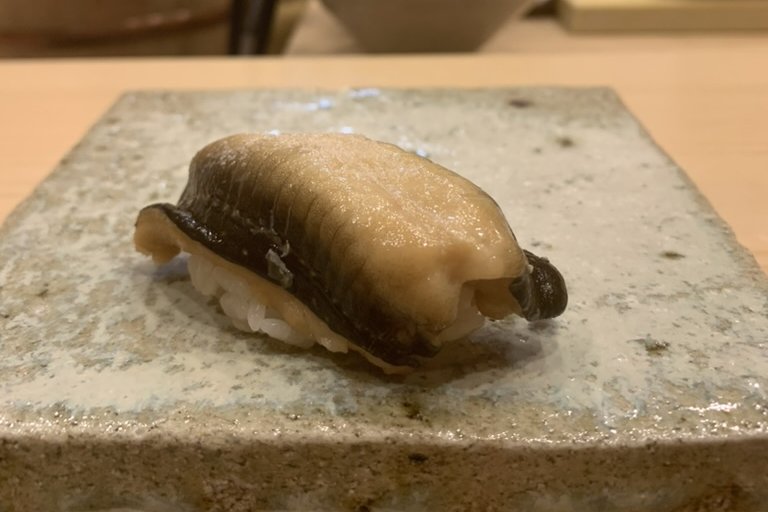
- Warm and briny toward the end. Anago (sea eel), served warm and soft enough to collapse against the rice; uni (sea urchin) and ikura (salmon roe) as gunkan, wrapped in nori. Big, oceanic flavors that would have flattened the white fish had they come first.
The order isn’t rigid — seasonality and the day’s market push pieces around — but the direction of travel is constant: lean to fat, cool to warm, quiet to loud.
How it ends
The close is almost ritual. A maki — a slim tekka-maki (tuna roll), kanpyō, or a hand roll — often signals the turn toward the finish, sometimes alongside a bowl of akadashi (red miso soup). And then tamago, the egg — eaten last by long convention, and historically a piece used to judge a kitchen. Most counters today serve the kasutera (castella) style: a dense, faintly sweet, cake-like block bound with ground shrimp and grated yam and baked slow, dessert in all but name. A few old shops still make the traditional kind instead — a thinner, layered rolled omelette, more egg and dashi than sugar, pressed over rice as a final piece of nigiri.
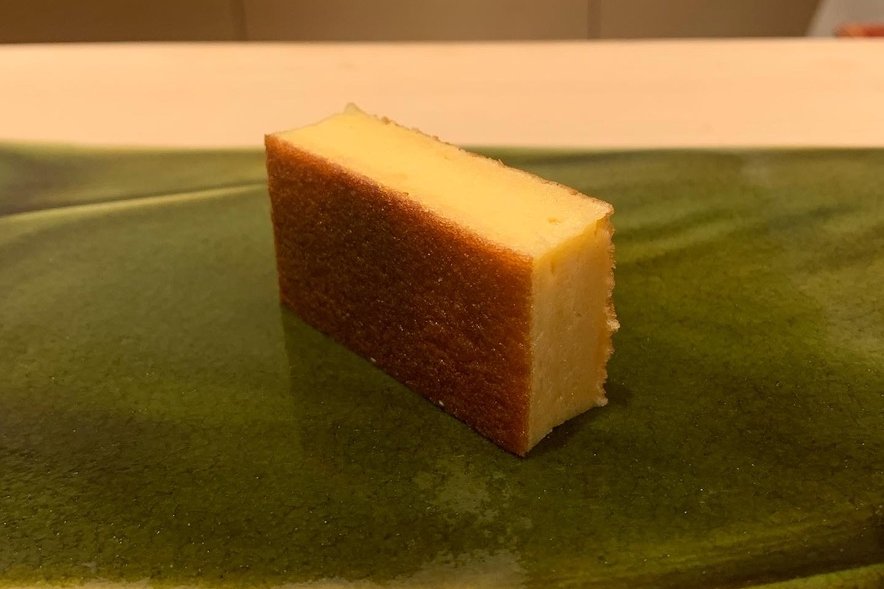
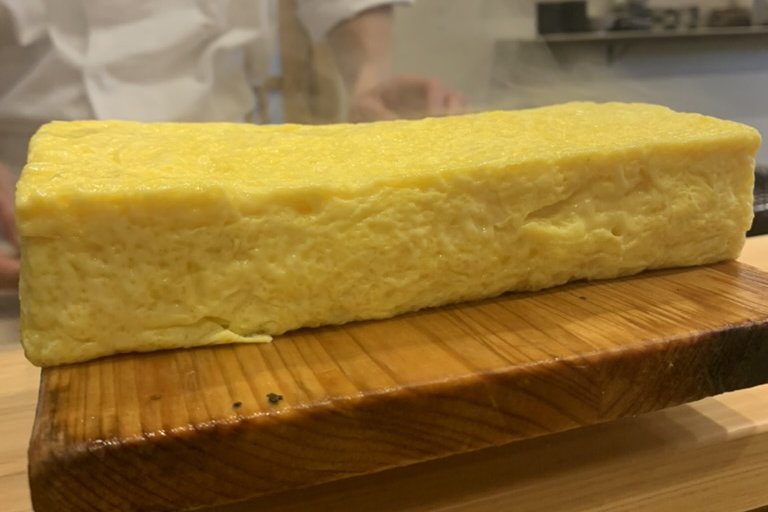
Many counters will, around here, quietly offer okonomi — a few extra pieces “as you like,” if you’re still hungry and want to call your own. The composed course is over; what follows is yours to direct.
Why it’s built this way
Strip away the detail and the logic is simple: protect the palate. Lean, delicate flavors need a clean mouth, so they go first; rich, fatty, briny ones can follow because they don’t need protecting; warmth and sweetness close because they’re the natural full stop. Underneath all of it sits the shari — the seasoned rice, kept near body temperature — the one constant from the first nigiri to the last.
That’s the quiet sophistication of an omakase. It looks like the chef is simply handing you the best of the day, and he is — but in an order built so that every piece arrives at the moment it will taste best. Your only real job is to keep his timing: eat each nigiri when it’s set down, while the rice is still loose and warm. (For the rest of your side of the bargain, see counter etiquette.)