Counter etiquette in Japan: how to be a good guest at the bar
A sushi or kappo counter is a small, intimate stage: a handful of seats, the chef an arm’s length away, the kitchen open to the room. The etiquette around it can look intimidating, but almost all of it comes down to two ideas — respect for the chef’s craft, and keeping the rhythm of the meal. Hold onto those, and the “rules” stop feeling like a test.
Arrive ready
- Be on time. Many counters seat everyone at once and start together; arriving late throws off the chef’s timing, and courses are often prepared to the minute.
- Skip strong perfume or cologne. Scent competes with the delicate aromas the chef is building, and at a small counter it carries to your neighbors.
- Keep the counter clear. Bags on the hook or floor, phone off the wood. The counter is the chef’s workspace, not a table.
Eat with the chef’s timing
- When a piece lands, eat it promptly — nigiri especially is built to be eaten right away, in one bite, while the rice is still warm and loose.
- Hands or chopsticks are both fine for nigiri; use chopsticks for sashimi.
- Go easy on the soy, and when you do dip, dip the fish, not the rice — rice falls apart and over-salts the bite. Often the chef has already seasoned the piece and no dip is needed.
- Gari (pickled ginger) is a palate cleanser between pieces, not a topping.
- Don’t rub disposable chopsticks together — it implies they’re cheap.
- You don’t need to ask for substitutions, but it’s welcome to mention a real allergy or a strong dislike at the start, not mid-course.
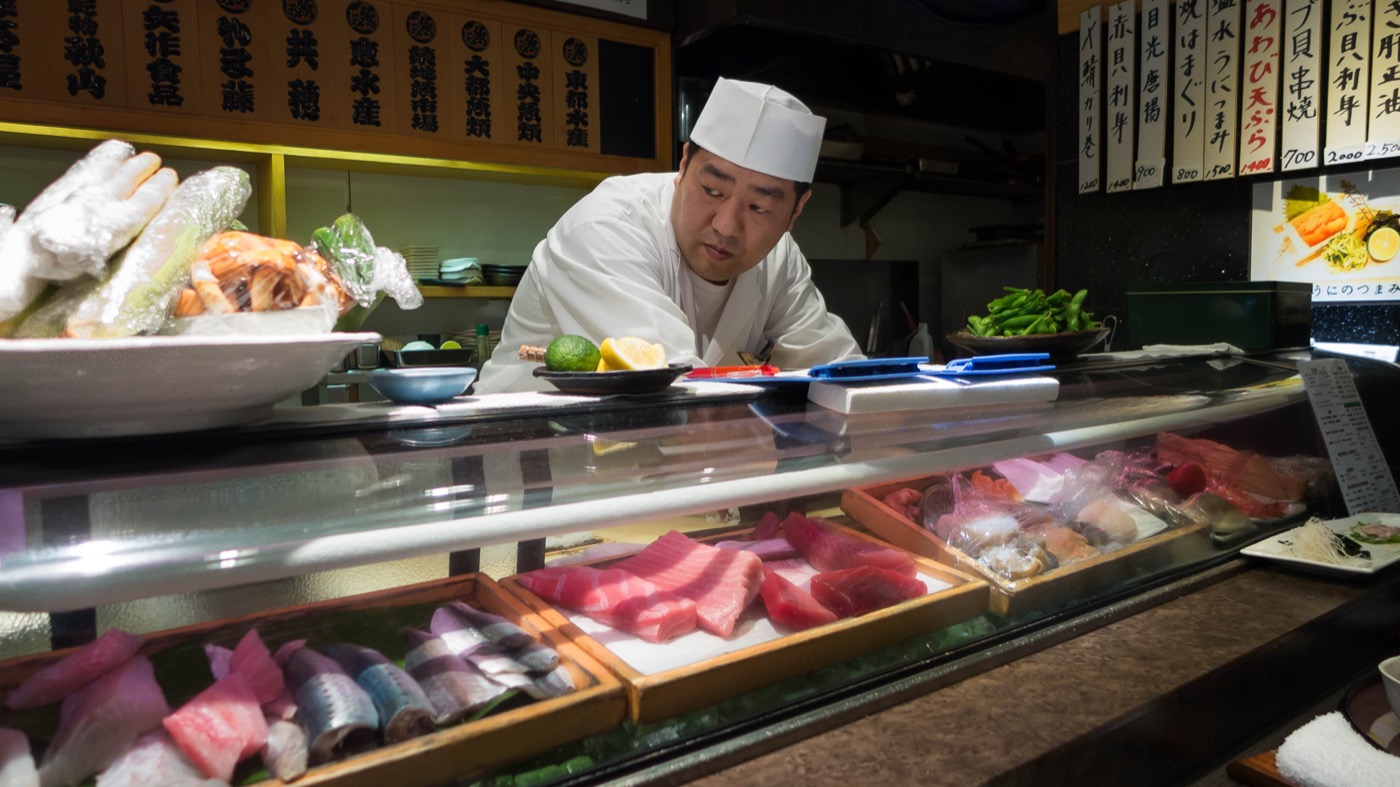
Photos, quietly
A quick photo of a dish is usually fine — but ask first (shashin, ii desu ka?), skip the flash and video, and never photograph other guests. Then put the phone away. The food waits for no one, and a piece of nigiri left sitting for the camera is a piece the chef would rather you’d eaten.
Phrases worth knowing
A few words go a long way, and the chef will warm to the effort.
| Phrase | When to use it |
|---|---|
| Itadakimasu (いただきます) | Before the first bite — “I gratefully receive.” |
| Omakase de (おまかせで) | “I’ll leave it to you” — to order the chef’s choice. |
| Oishii desu (おいしいです) | “It’s delicious” — say it; the chef will appreciate it. |
| Sumimasen (すみません) | To get attention politely; also “excuse me” and “thank you.” |
| Onegaishimasu (お願いします) | “Please,” when asking for something. |
| … wa nigate desu (〜は苦手です) | “I’m not great with …,” to flag a dislike (e.g. uni wa nigate desu). |
| Kekkō desu (けっこうです) | “I’m fine, thank you,” to decline politely. |
| Okaikei onegaishimasu (お会計お願いします) | “The bill, please.” |
| Gochisōsama deshita (ごちそうさま) | After the meal — thanks for the feast. Say it to the chef on the way out. |
The point of all of it
None of this is about stiffness; it’s the opposite. Knowing the rhythm lets you relax into it — talk to the chef, ask what you’re eating, and pay attention to the food instead of the rules. That ease is the whole reason to sit at the counter in the first place.