Hikarimono: the shining fish that test a sushi chef
At a serious sushi counter, the pieces that tell you the most about the chef are rarely the showy ones. Skip past the fatty tuna and the uni for a moment and watch what happens with the hikarimono — literally “shining things,” the silver-skinned fish.
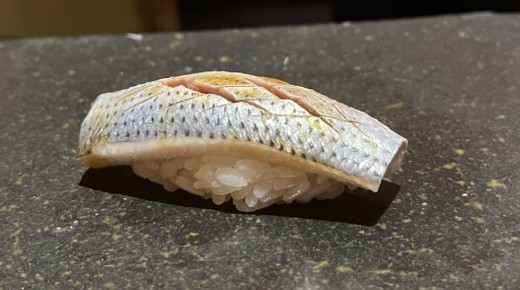
What counts as hikarimono
The emblem of the group is kohada, young gizzard shad, with its dappled, jewel-like skin. Around it sit aji (horse mackerel), sayori (halfbeak), sanma (Pacific saury), iwashi (sardine), kisu, and the bigger, oilier saba (mackerel). What unites them is that bright skin and a frank, oily flavor that can’t simply be sliced and served.
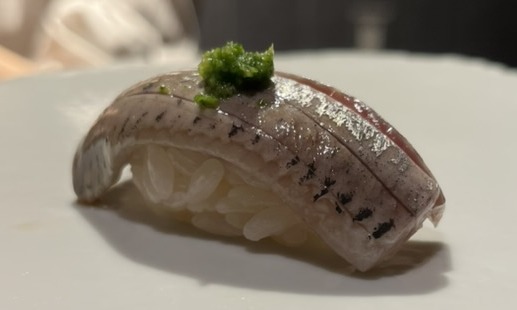
Why they’re a quiet test
A good piece of tuna can reach the counter almost untouched. Hikarimono can’t. They are nearly always cured: first salted to firm the flesh and pull out water, then marinated in vinegar to soften the oil and lift the taste. The window is narrow — too light and the fish reads as merely fishy, too heavy and it’s pickled into anonymity. Kohada in particular is the piece chefs are judged on, because there is nowhere to hide. Get the cure right and it’s bright, clean, and deeply savory all at once.
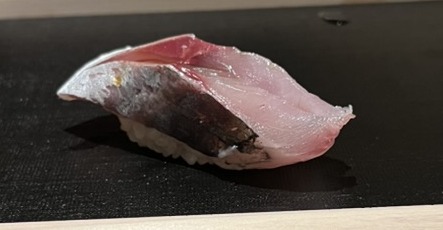
When each is at its best
Hikarimono are seasonal fish, and a good counter follows the calendar closely. As a rough guide to when each is at its peak:
| Fish | Best season |
|---|---|
| Kohada (gizzard shad) | High summer for the tiny shinko, then autumn into winter |
| Aji (horse mackerel) | Late spring through summer |
| Sayori (halfbeak) | Early spring |
| Sanma (Pacific saury) | Autumn, when it turns rich and oily |
| Iwashi (sardine) | Summer through autumn, fattest in autumn |
| Kisu (whiting) | Summer |
| Saba (mackerel) | Autumn into winter |
How to read them at the counter
Hikarimono usually appear early in an omakase, to wake the palate, or slipped between richer pieces as a kind of palate-cleanser. A few things help:
- Eat them promptly — the balance of a freshly formed piece shifts within a minute.
- Look at the skin. The fine scoring you sometimes see isn’t decoration; it lets the seasoning reach the flesh and makes the piece easier to eat.
- Go easy on the soy. The seasoning is already inside the fish, and a heavy dip drowns exactly the balance the chef worked for.
And if pronounced fishiness isn’t to your taste, say so — it’s perfectly polite to ask the chef to swap a piece. The most assertive of the group are saba, iwashi, and kohada, and a good chef will happily trade them for something milder rather than have you spend a course you don’t enjoy.
Once you start watching for the hikarimono, the whole meal reads differently. They are the chef’s handwriting — and learning to notice them is one more way to sit down at the counter prepared.