Shun: the seasons of the sushi counter
There’s a word that governs everything at a Japanese counter: shun (旬), the narrow window when an ingredient is at its absolute peak. Eating with the seasons isn’t a marketing line here — it’s the whole grammar of the cuisine. A great chef’s menu in April and the same chef’s menu in December are almost different restaurants.
The Japanese even split a season three ways: hashiri (走り), the first, prized early arrivals; shun, the peak; and nagori (名残), the wistful last of it before it’s gone for a year. Read that way, a counter is really a calendar. Here’s the year in its most symbolic ingredients.
Spring (春)
Spring is the awakening — light, fragrant, often named for the cherry blossom.
- Sakura-dai — sea bream (madai) at its spawning best, the skin flushed pink: the “cherry-blossom bream.”
- Hotaru-ika — firefly squid from Toyama, whose spring shoals light the bay at night.
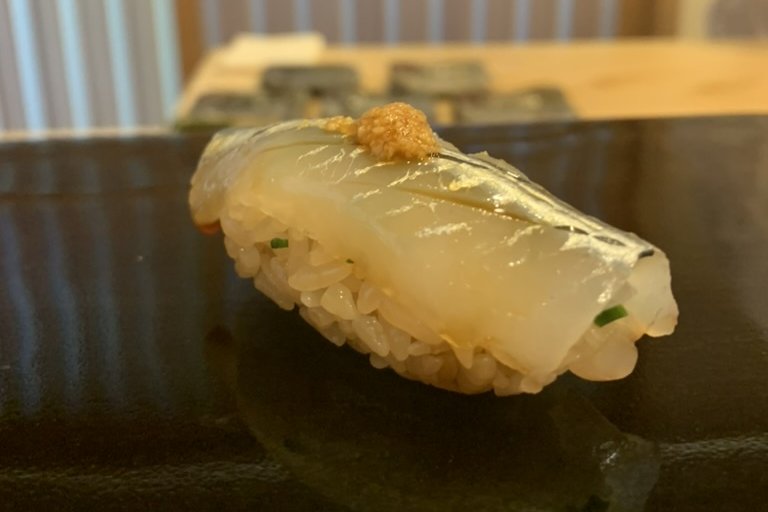
- Sayori — halfbeak, slim and silver, a classic spring hikarimono.
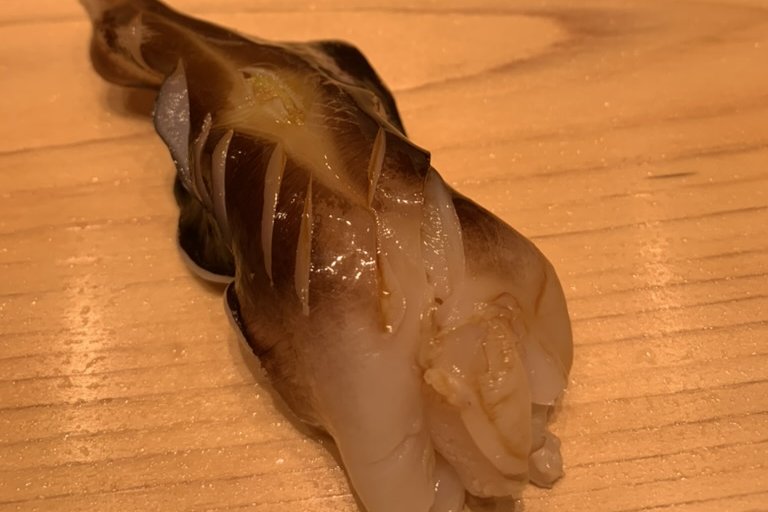
- Torigai, mirugai, aoyagi — the spring shellfish, sweet and crunching.
- Sawara — Spanish mackerel, whose kanji (鰆) literally carries the character for spring.
- Sakura-ebi — tiny pink shrimp from Suruga Bay, dredged only in spring and autumn.
- Hatsu-gatsuo — the “first bonito,” racing up the coast at spring’s end, lean and celebrated in old poems.
Summer (夏)
Summer leans on cool, clean white fish and stamina foods.
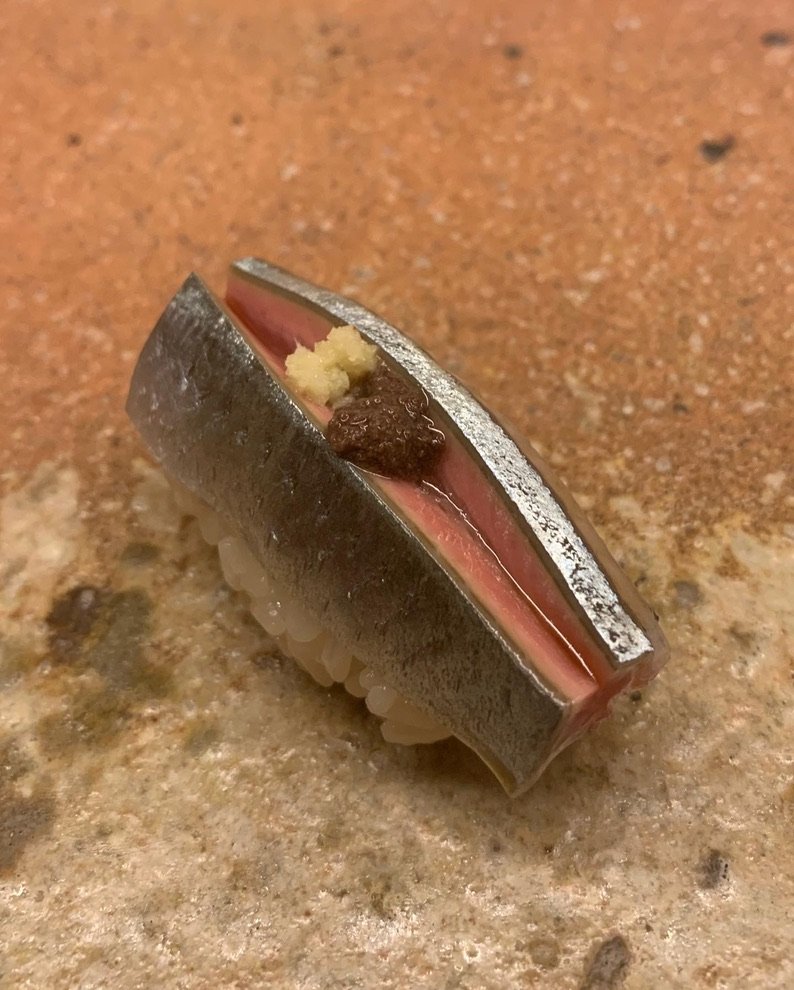
- Shinko — the baby gizzard shad (young kohada), the season’s first in July; pound for pound the most expensive fish in Tokyo, and a quiet contest over who serves it earliest.
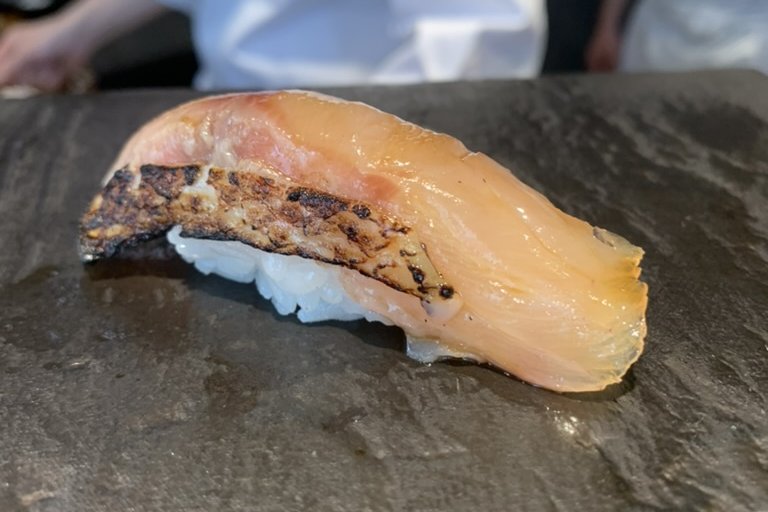
- Aji — horse mackerel at its fatty peak.
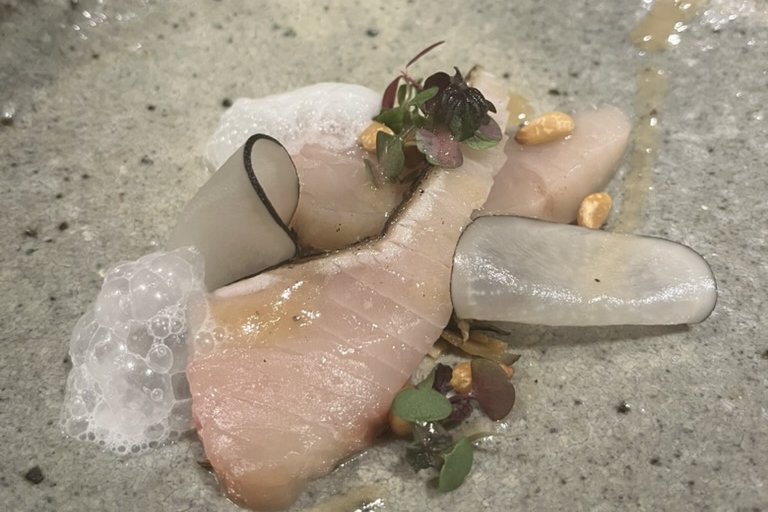
- Isaki — chicken grunt, a prized early-summer white fish.
- Anago — sea eel, soft and at its best in the warm months.
- Hamo — pike conger, the soul of a Kyoto summer, painstakingly bone-cut.
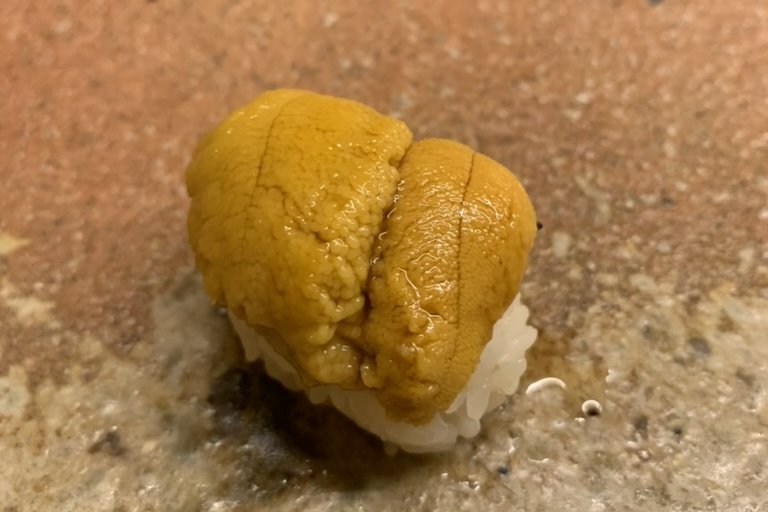
- Uni — Hokkaido sea urchin, richest in summer.
- Unagi & ayu — freshwater eel (eaten on doyō no ushi for stamina) and sweetfish, the washoku stars of the heat.
- Torigai — cockle; a spring shellfish whose season lingers into early summer.
Autumn (秋)
Autumn is the harvest — fish laying fat back on, and roe.
- Sanma — Pacific saury, the fish of autumn, grilled whole with salt or pressed as nigiri.
- Modori-gatsuo — the “returning bonito,” swimming back south fat and rich, the mirror image of spring’s lean hatsu-gatsuo.
- Aki-saba — autumn mackerel, oily and superb.
- Kohada — the gizzard shad now grown into its prime.
- Ikura & sake — the autumn salmon run brings glistening salmon roe.
- Kanpachi, mushrooms, chestnuts — the season’s harvest reaching the kitchen.
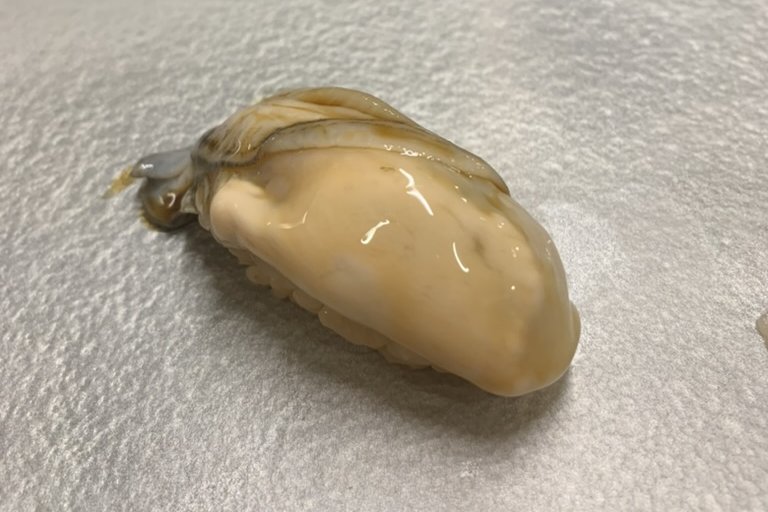
- Kaki — oysters come into season as the cold arrives in late autumn, before peaking in winter.
Winter (冬)
Winter is fat and richness — the cold’s reward.
- Honmaguro & ōtoro — bluefin at its yearly peak; the cold is what lays on the belly fat. (See the tuna guide.)
- Buri — yellowtail as kan-buri (寒鰤), the winter king of Himi and the Hokuriku coast.
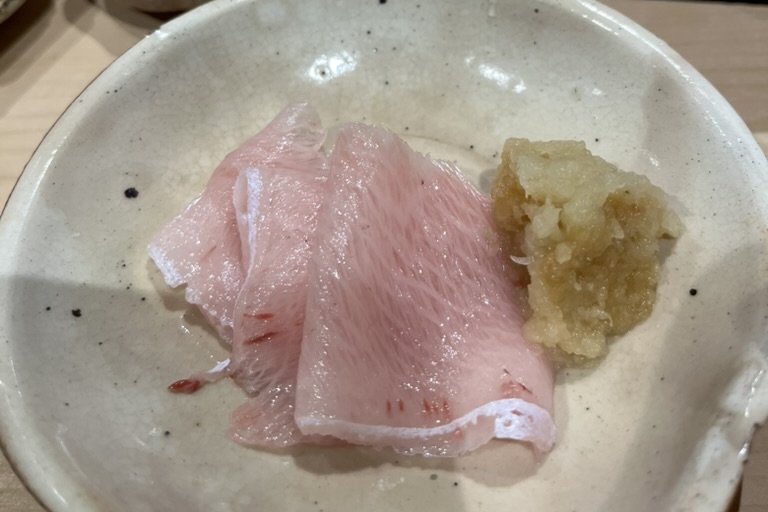
- Hirame — flounder as kan-birame, its flesh tightened by the cold.
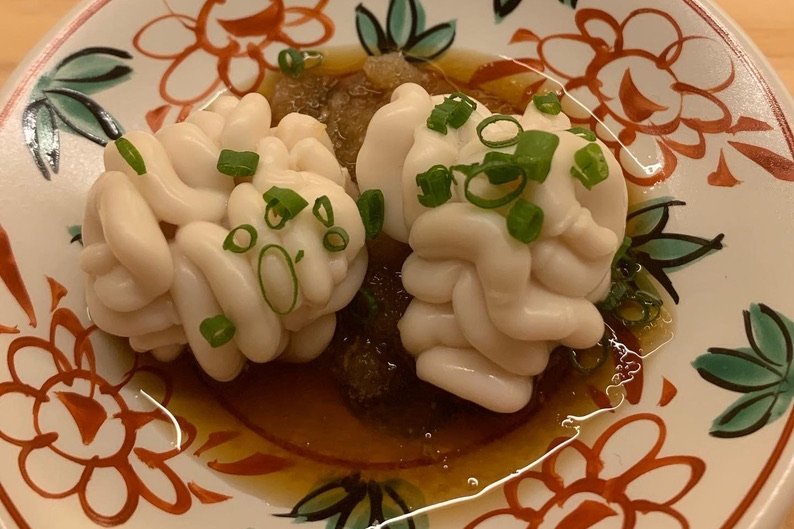
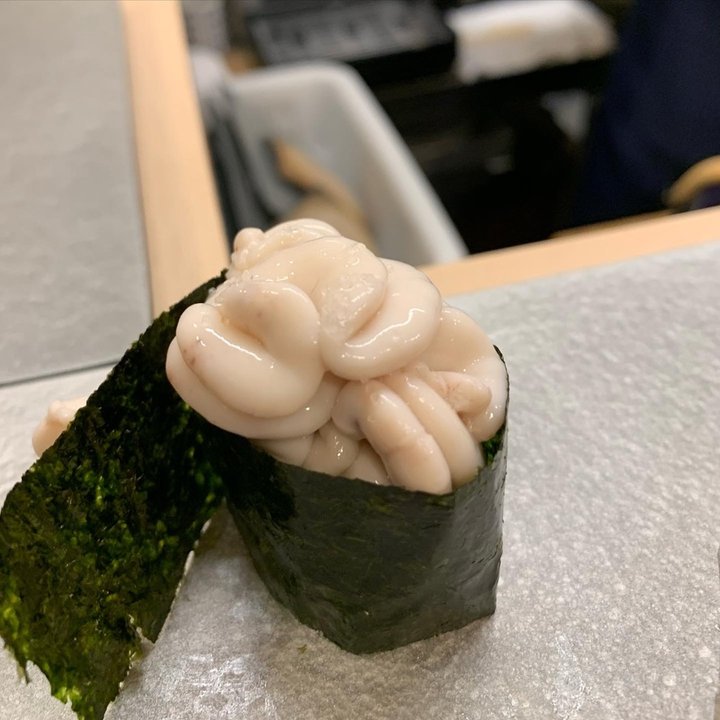
- Tara & shirako — cod, and its prized milt (shirako), a winter luxury.
- Fugu — pufferfish, the great winter ceremony of Japanese dining.
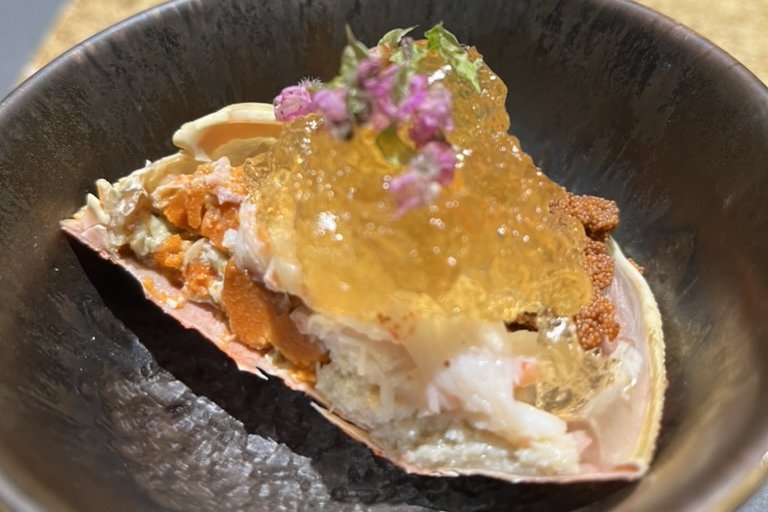
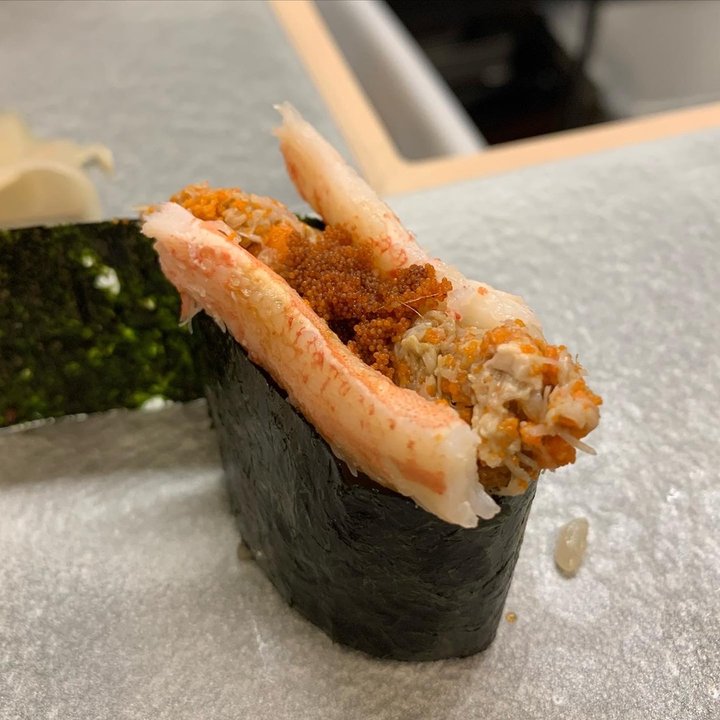
- Kani — snow crab, the season’s centrepiece.
- Ankō & ankimo — monkfish and its rich liver, the “foie gras of the sea.”
- Kaki & nori — oysters at their plump best, and the winter-harvested nori that wraps the year’s finest gunkan.
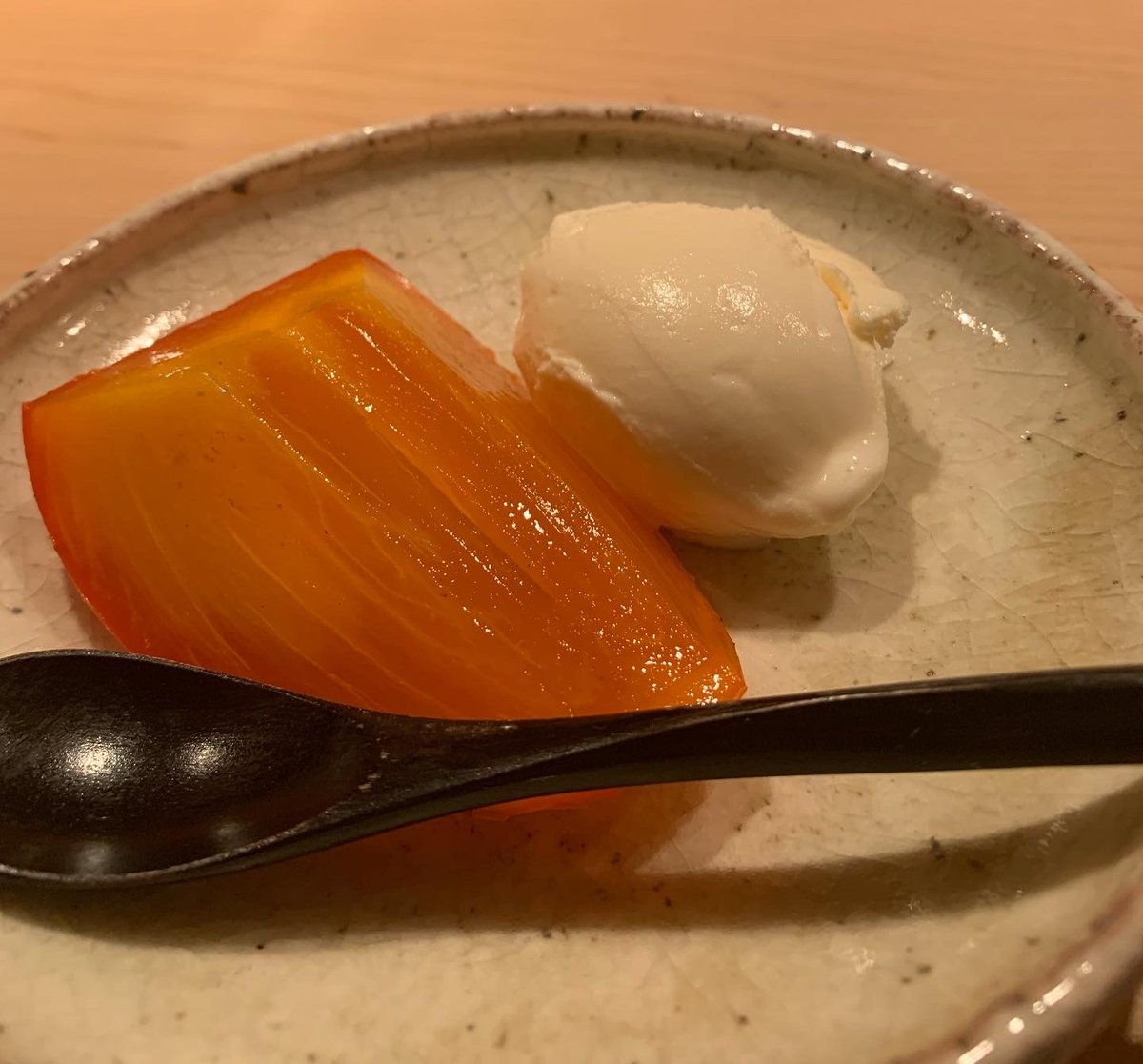
- Kaki (柿) — kaki again, a different kanji from the oyster: the persimmon, the fruit that so often closes a washoku meal in the cold months.
This is why a chef sources the way he does, and why the same counter rewards a return visit a season later. To eat the shun is to taste the year passing — and to understand that, at a Japanese counter, the calendar is the menu. (For where these fish come from, see meisanchi; for how they’re sequenced into a meal, the anatomy of a sushi omakase.)