Jukusei: why the best sushi fish isn't fresh
The most stubborn myth in sushi is that fresher is always better. It isn’t. Squid pulled from the tank an hour ago can be nearly flavourless; a tuna eaten the day it was landed is often flat. For most of what crosses a great counter, the best moment is not the catch but days — sometimes weeks — later, after the fish has been deliberately aged. The word is jukusei (熟成), “ripening,” and learning to read it is one of the deeper pleasures of the counter.
Fresh isn’t best
A just-killed fish is in rigor — firm to the point of stiff, and low on flavour. Rest it under the right conditions and two things happen: it relaxes and softens, and it gets tastier. The flavour a fish has the day it’s caught is mostly potential; time is what converts it.
This is why “same-day” is not a compliment at a serious sushi-ya, and why the chef’s refrigerator — or his supplier’s — matters as much as the boat.
What aging actually does
Two processes run in parallel once a fish is dead.
The first builds umami. The energy compound in living muscle, ATP, breaks down in stages, and one of those stages is inosinate (IMP) — one of the great savoury molecules, the same one that gives dashi and cured ham so much of their depth. IMP isn’t present at the moment of death; it accumulates over hours and days. (Push too far and it decays into compounds that taste stale, so every fish has a window.) Alongside it, the flesh’s own enzymes slowly break proteins down into free amino acids like glutamate, another pillar of umami. The fish is, in effect, seasoning itself.
The second changes texture. Stiff, post-rigor muscle softens; connective tissue loosens; moisture leaves, concentrating what remains. A white fish that was crunchy and bland turns silky and deep; tuna goes from firm to melting.
The old ways were already aging
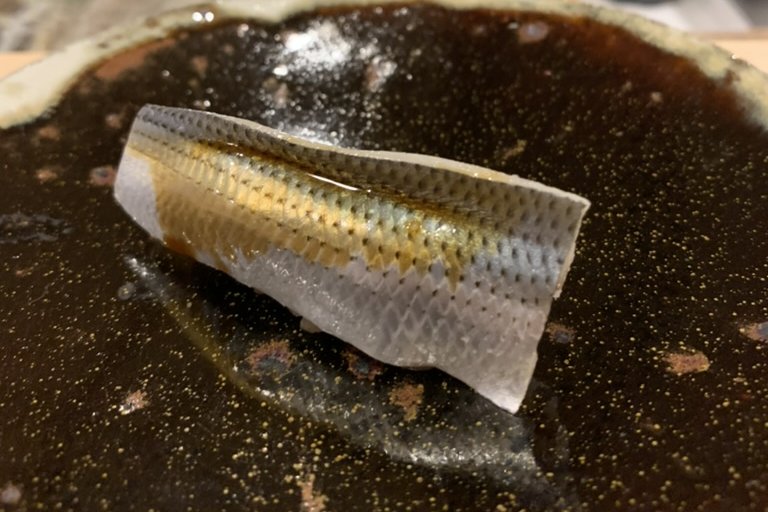
None of this is new. Edomae sushi was born as preservation, and every classic preparation is a form of maturation. Zuke — marinating lean tuna in soy — both kept it and deepened it. Silver-skinned hikarimono like kohada are cured in salt and vinegar, which firms, seasons, and ripens them at once. White fish are pressed between sheets of kelp (kombu-jime) to trade water for the kelp’s glutamate. Anago is simmered and rested. Long before refrigeration, the counter was already in the aging business — it just called it curing. (See the tuna guide on zuke, and hikarimono on the cured silver fish.)
Modern jukusei
What’s changed is ambition. Today’s top chefs age fish far longer and more deliberately — whole white fish rested for days, tuna for a week, two weeks, or more — under carefully controlled temperature and humidity, closer to dry-aging beef than to anything casual. It only works if the fish was handled perfectly from the start: killed and bled cleanly at the catch (ikejime), kept cold, never allowed to spoil. Much of that skill lives with the specialist suppliers as much as the chef — the great tuna dealers age their fish for the counters they serve. (See the tuna kings.)
Reading it at the counter
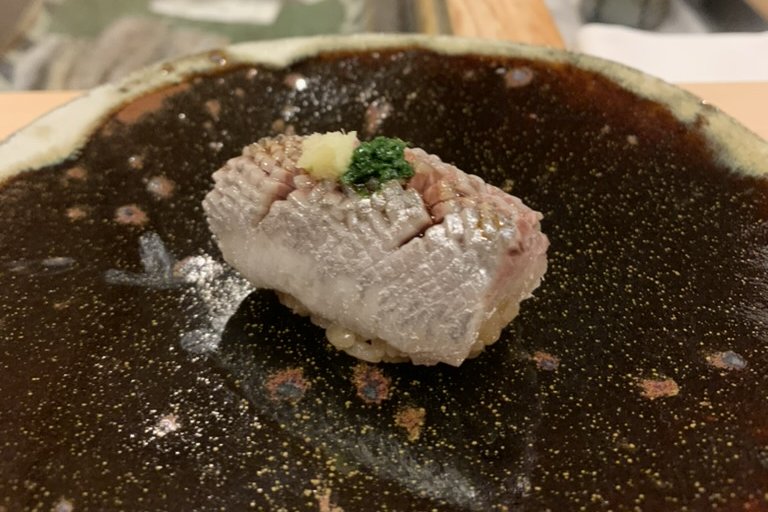
Aged fish announces itself: the flavour is rounder and more savoury, the texture softer, almost dissolving, with none of the squeak of the ultra-fresh. Part of the chef’s art is knowing each neta’s peak — a few days for one fish, a fortnight for another — and serving it on exactly the right day. Part of it, too, is knowing when not to age: squid, some shellfish, and certain white fish are best snapping-fresh, and a good chef plays the fresh against the aged across a meal.
So when the toro melts and the white fish tastes of far more than it looks like it should, you’re not tasting freshness. You’re tasting time — and a chef who knew exactly how much of it to allow.