Theatre-style sushi: when the counter becomes a stage
The traditional sushi counter is built on restraint: a few seats, little talk, the chef working in near-silence while the rice does the talking. Then there’s the opposite tradition — what Japanese diners half-affectionately call gekijō-kei (劇場系), “theatre-style” sushi, where the meal is openly a performance and the chef is the star.
It’s a polarising genre. To some it’s the most fun you can have at a counter; to others it’s everything sushi shouldn’t be. Two names define it.
Teruzushi: the showman of Kitakyushu
Teruzushi (照寿司), in the industrial city of Kitakyushu in Fukuoka, is the most literal example. A fifty-year-old neighbourhood shop was reinvented by its third-generation chef, Takayoshi “Taka” Watanabe, into something close to dinner theatre — dramatic lighting, music, and a signature flourish in which he hands each piece across the counter with his index finger and little finger splayed, so the sushi rests on just two fingers. The set piece is the moment he hoists a whole giant grouper overhead before breaking it down. That act, broadcast on Instagram, built a global following almost overnight.
The roughly twenty-course omakase runs about ¥38,500, and the brand has since travelled — there’s now a Teruzushi in New York charging accordingly. It is, unapologetically, a show.
Hatsunezushi: the counter as a one-man show
Hatsunezushi (初音鮨) in Ōta, Tokyo, arrives at theatre by a different road. Founded in 1893 and now run by fourth-generation chef Katsu Nakaji, it’s a westernized house a few minutes from Kamata station — and the spectacle is Nakaji himself. The meal opens with booming introductions; regulars turn up early just to watch him cut vinegar into rice straight from a charcoal-cooked pot, and the pieces that follow are famously generous.
What makes it remarkable is the bill. Hatsunezushi held two Michelin stars while charging a fraction of what comparable counters do. Here the spectacle is personality, not price.
The counterpoint: Sushi Yuu
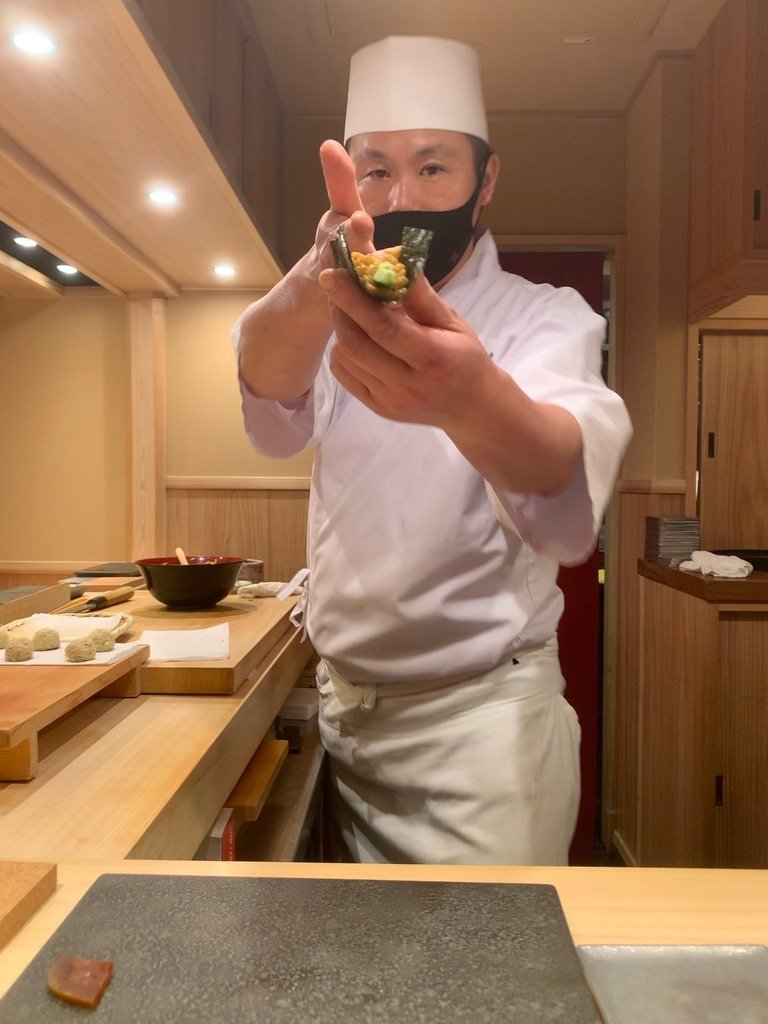
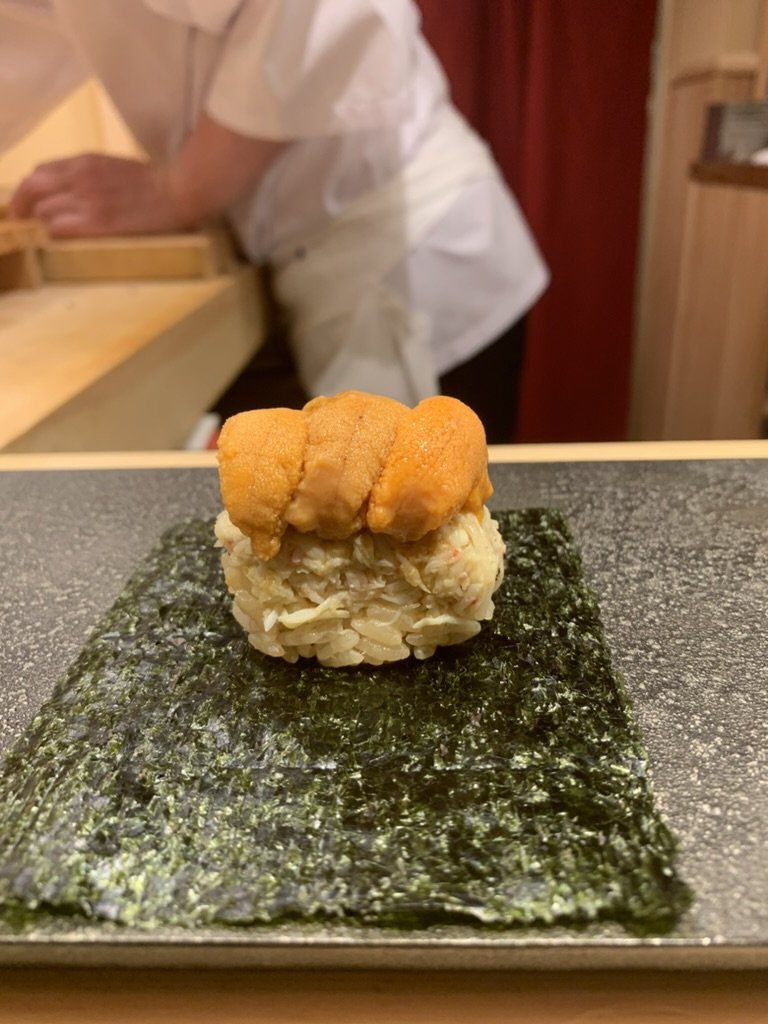
To see what the purists are defending, sit at Sushi Yuu (鮨 由う). Chef Ozaki’s Edomae counter — moved from Roppongi to a quiet floor near Ginza Itchome in 2023, and a Michelin one-star — is everything the theatrical places are not: composed, exact, and built around the rice and the fish rather than the room. In most sushi places, chef would request you to take pictures silently, but in Sushi Yuu, photos, videos, are more than welcomed. In one of the branches, the signature is the “Inoue sniper”: a hand-roll passed across the counter with the finger leveled like a marksman — a wink, not the main event.
Spectacle or substance?
Purists bristle at all of this, and the case against is old and not unreasonable: great sushi is supposed to be quiet and austere, about the fish and the rice, with the chef’s ego disappearing rather than filling the room. Theatre, the argument goes, sells photographs rather than flavour — and a good deal of gekijō-kei fame has been built on social media more than on the plate.
The defence is just as fair. Hospitality in Japan has always had a performed element — omotenashi is itself a kind of choreography — and both Watanabe and Nakaji can genuinely cook; the showmanship sits on top of real technique, not in place of it. For a first-timer, especially a visitor intimidated by the silent, rule-bound counter, a chef who is warm, loud, and clearly enjoying himself can be the friendliest possible way in.
The honest answer is that gekijō-kei is a spectrum, and the only test that matters is whether the food survives the spotlight. At the good ones, the performance is seasoning, not the meal — turn off the lights and the sushi would still be worth the trip. That’s the line between a great theatrical counter and an expensive photo opportunity.
Is this something that non Japanese-speaking customers would also enjoy?
The answer is Yes.
Although the staff don’t speak any English, body language is always the best language to express oneself, and even if you don’t understand Japanese, the chef would try his best to entertain you, so you would never feel bored. If you don’t mind interacting with the chef, it would bring you the best dining experience. But if you are like me, just want to enjoy a meal in a comfortable and quietly space, it is better going somewhere else.