Machi-zushi: the neighborhood sushi that's less refined and just as good
Not all of Japan’s best sushi comes from a quiet counter with a months-long waitlist. Machi-zushi (町寿司, “town sushi”) is the other tradition — the neighborhood shop that’s been on the same corner for forty years, where the chef knows the regulars by name and a family can eat well without a reservation or a small fortune. It is less refined than the high-end counters, and that is precisely the point.
What “less refined” actually means
At a machi-zushi shop, the seams show, and pleasantly so. The rice is often a little cooler, a little sweeter, and more sharply vinegared than the body-temperature shari fussed over at a premium counter. The cuts are bigger and more generous — value is part of the appeal. The fish is good market fish rather than rare, aged, single-origin cuts.
None of that makes it lesser. It makes it dinner — unpretentious, satisfying, and often genuinely skilled. Plenty of machi-zushi chefs trained the same way their famous peers did; they’ve simply chosen a different room to work in. Many machi-zushi are also recommended by Michelin guide, which indicates that the quality is never compromised.
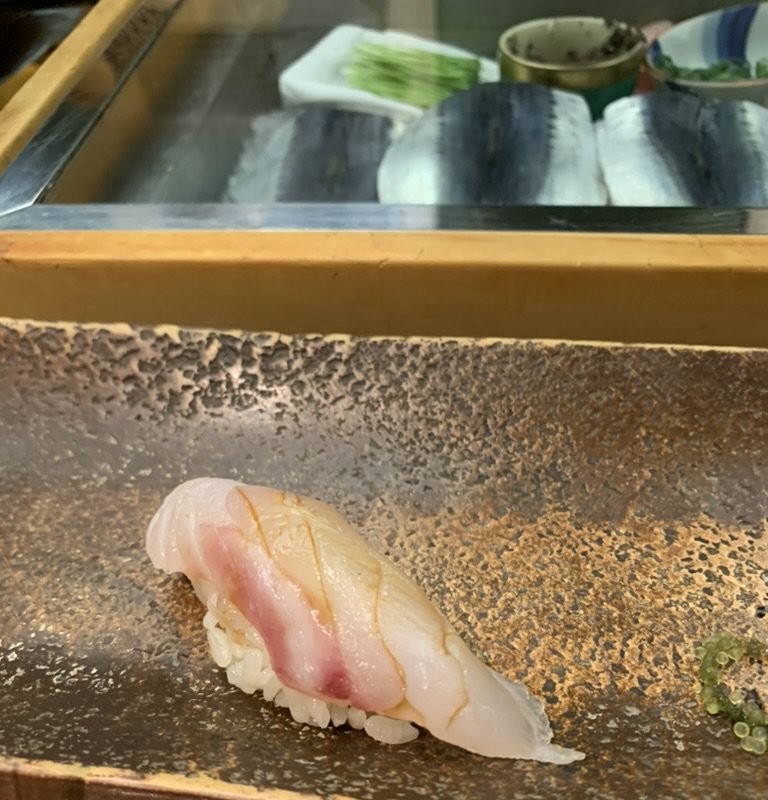
Premium sushi vs. machi-zushi
| Premium omakase | Machi-zushi | |
|---|---|---|
| Format | Chef-led omakase, fixed sequence | À la carte or sets — order what you like |
| Price | ¥¥¥¥ (often ¥20,000–50,000) | ¥–¥¥ (often ¥4,000–10,000) |
| Rice | Body-temp, lightly seasoned, carefully aged vinegar | Cooler, sweeter, more sharply vinegared |
| Fish | Rare cuts, aging, top grades | Solid market fish, generous portions |
| Booking | Reservations, referrals, hard to get | Usually walk-in |
| Room | Quiet, ceremonial, a handful of seats | Lively, casual, families welcome |
| You’re paying for | Precision, scarcity, the chef’s art | Value, comfort, neighborhood character |
The gap is real, but it’s a difference in intent as much as quality. A premium counter is asking for your full attention — the silence, the pace, the single perfect bite. A machi-zushi shop is asking you to relax and eat. Both can send you home happy.
When to choose which
Go premium when the meal is the occasion: a celebration, a once-a-trip splurge, the chance to taste what an obsessive can do with rice and a knife. Go to a machi-zushi shop for everything else — a weeknight, a long lunch, a first taste of real Edomae sushi without the intimidation, or simply because you want to eat a lot of very good sushi and still make the last train.
Symbolic machi-zushi places in Tokyo
Matsuno Sushi 松野寿司
An eight-seat Edomae counter tucked into a residential corner of Toshima, serving honest, generously cut neighborhood sushi since 1969 — and quietly holding a Michelin Bib Gourmand for it. 2-16-12 Minami-Nagasaki, Toshima-ku, Tokyo · 8 min from Shiinamachi Station (Seibu Ikebukuro line)
Kizushi 喜寿司
One of the historic houses of Edomae sushi, founded in Ningyocho in 1923 and still run by the founding family, who keep alive traditional — sometimes near-forgotten — preparations you’ll find almost nowhere else. 2-7-13 Nihonbashi-Ningyocho, Chuo-ku, Tokyo · 2 min from Ningyocho Station (Hibiya / Asakusa lines)
Matsu Sushi 松寿司
Yanaka’s oldest sushi shop — a warm, unpretentious third-generation spot dating to 1940, as loved for its easy neighborhood welcome as for its signature inari rolled with pickled lotus root. 3-2-7 Yanaka, Taito-ku, Tokyo · 3 min from Sendagi Station (Chiyoda line)