← Foodie log
Last visit Apr 2024 · 2 visits

Sushi Namba Hibiya: where every piece has a temperature

Sushi Namba (鮨 なんば) sits on the third floor of Tokyo Midtown Hibiya, directly off Hibiya station — an eight-seat counter, plus a small private room, that has quietly become one of the most decorated sushi-ya in the city. The Tabelog score sits above 4.5, with a Tabelog Award to match. It looks like a calm, glossy room in a mall; what happens at the counter is anything but casual.

The chef

Hidefumi Namba (born 1974) stepped behind a sushi counter at twenty and went out on his own at thirty-two — first in Ogikubo, then Asagaya, where he spent years rebuilding his style around a single obsession, before moving to Hibiya when Midtown opened in 2018. That obsession is the whole story of the meal.

Sushi by the degree

Most chefs aim for body-temperature shari and stop there. Namba treats every piece as its own equation, serving each topping and its rice at a specific, different temperature. Lean akami might arrive on rice at 36°C with the fish at 21°C; fatty toro on rice at 38°C with the fish at 25°C — each pairing tuned so the fat, the acidity of the rice, and the warmth in your mouth all meet at exactly the right instant. The omakase even lists the numbers, piece by piece.

It sounds clinical. It eats as the opposite: every bite lands in its own perfect window, and the effect across a meal is an almost eerie consistency — nothing too cold, nothing flat, each neta at the precise heat that makes it sing. Over two visits it’s the thing that stayed with me, more than any single piece.
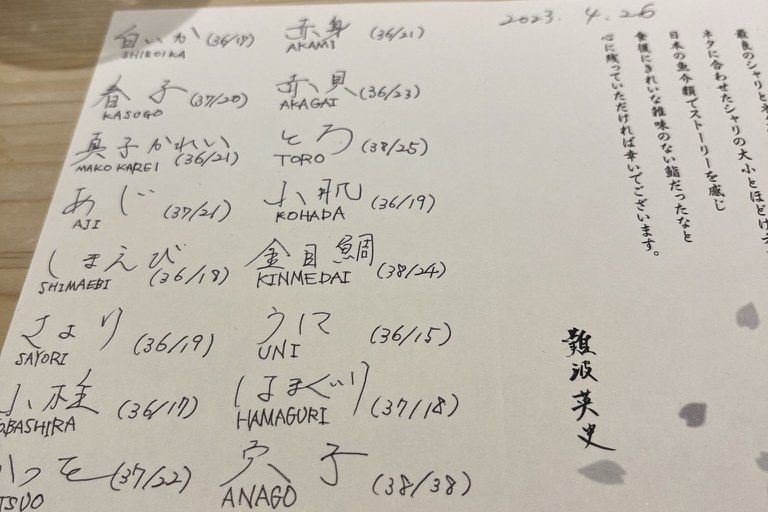
A handwritten card listing each sushi topping with two temperatures, signed by the chef
The chef's card for the day — each topping with two numbers, the temperature of the rice and of the fish. Toro at 38° / 25°, uni at 36° / 15° — and signed, as always, by Namba.

The meal

The meal starts with a warm soup with steamed Kinmedai, the broth is rather sweet, but full of umami. The signature isn’t a particular neta. It’s the thermometer’s worth of attention behind each one. The chef will hand you a piece of paper with all the ingredients for today, and its served tempurature.
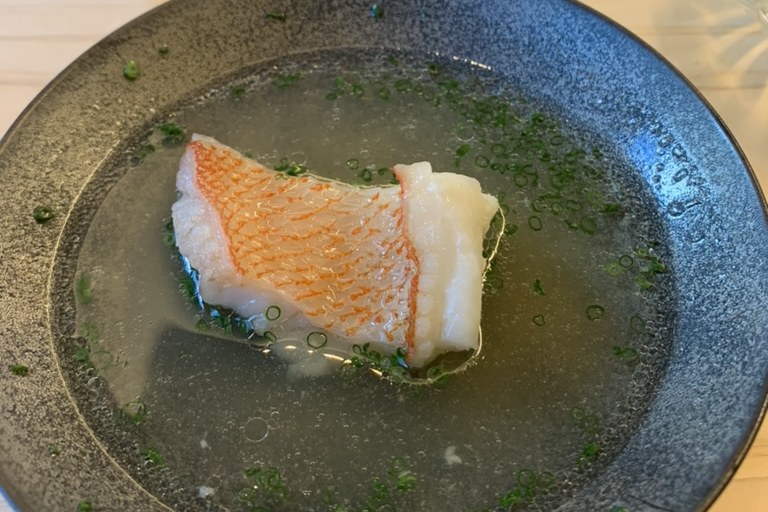
A piece of steamed golden-eye snapper in a clear broth scattered with chives, in a dark bowl
The opener — steamed kinmedai (golden-eye snapper) in a warm, faintly sweet broth full of umami, scattered with chives.

Across the counter

A spring meal, from the cooked dishes through the nigiri, ending where Edomae always does.
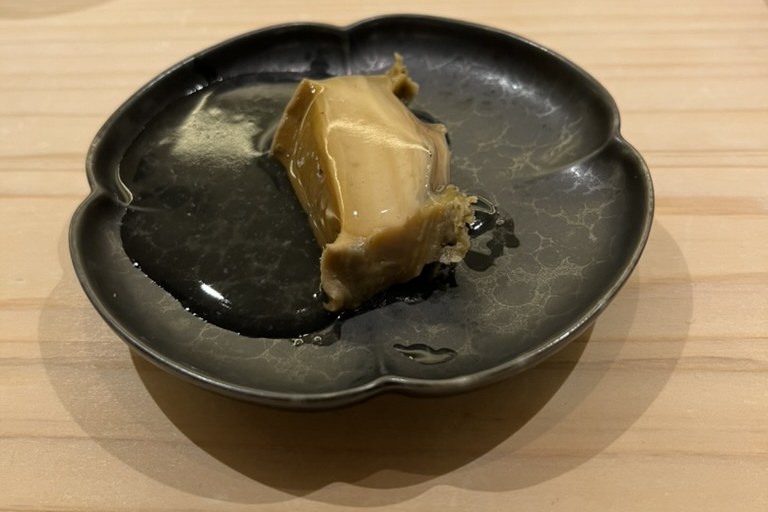
A piece of pale steamed abalone in a dark sauce on a black flower-shaped plate
Steamed awabi (abalone) — slow-cooked to a yielding softness, in a sauce of its own liver.
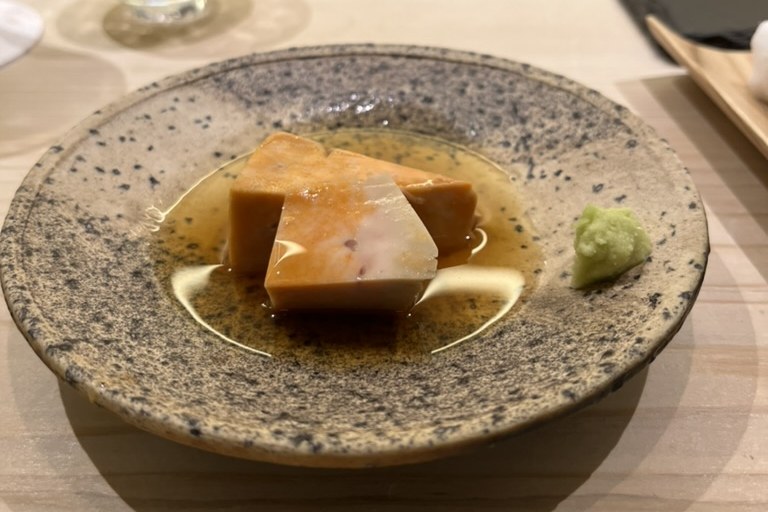
A block of monkfish liver in a light ponzu with a dab of wasabi on a speckled plate
Ankimo (monkfish liver), set firm and served cool in a light ponzu with a dab of wasabi — the foie gras of the sea.
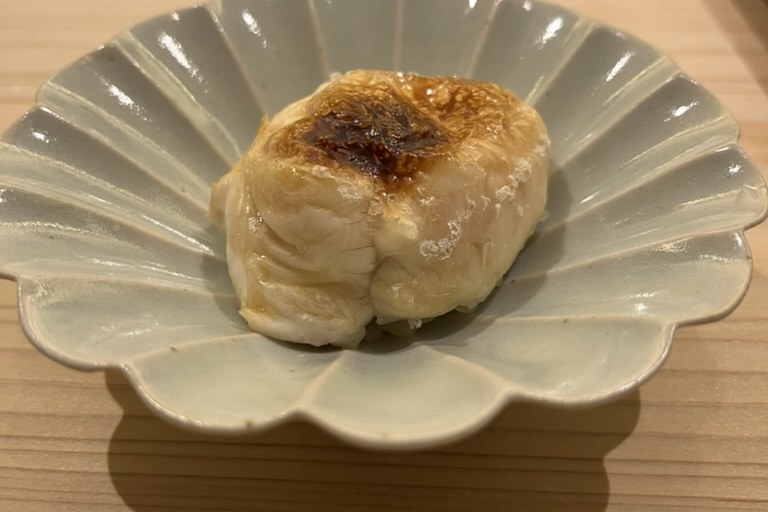
A lightly torched piece of pufferfish milt, browned on top, on a pale chrysanthemum dish
Shirakotorafugu (pufferfish) milt, lightly torched so the surface caramelises over a custard-soft centre.
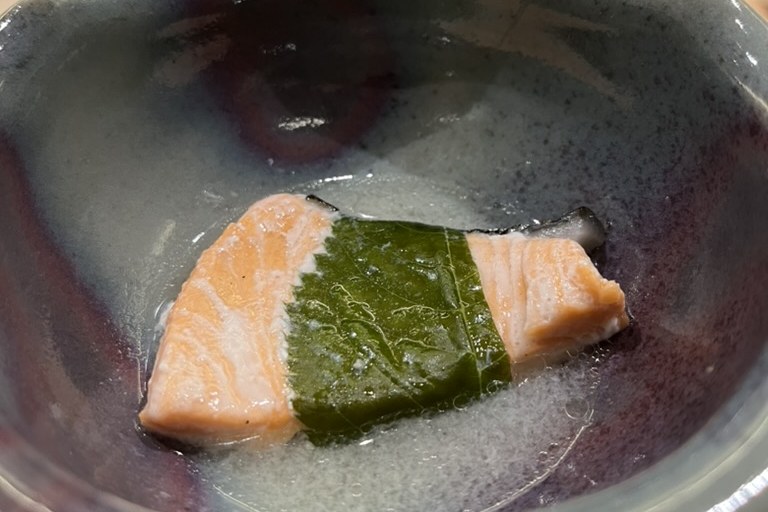
Two pieces of steamed trout flanking a sakura leaf in a clear broth, in a purple-glazed bowl
Steamed masu (trout) with a sakura leaf, in a clear, faintly salted broth — a taste of spring.
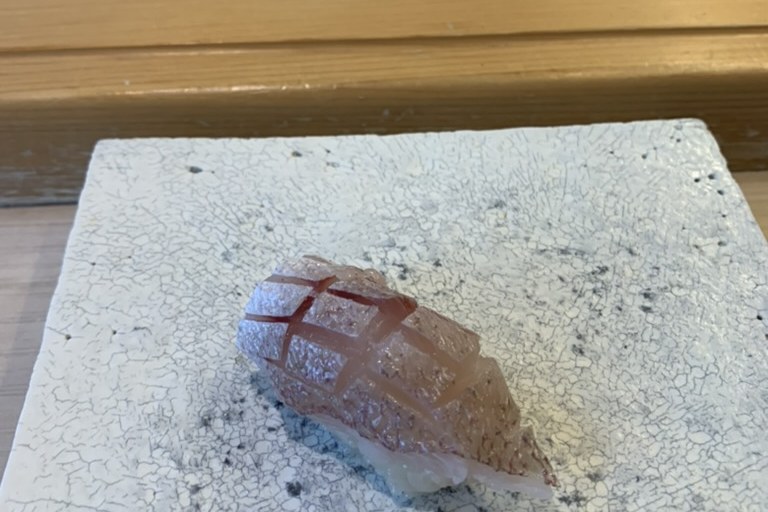
A young sea bream nigiri with finely scored skin on a white speckled plate
Kasugo — young sea bream, lightly cured, its skin finely scored. A spring piece.
A gizzard shad nigiri with blue-silver scored skin, topped with a little grated ginger
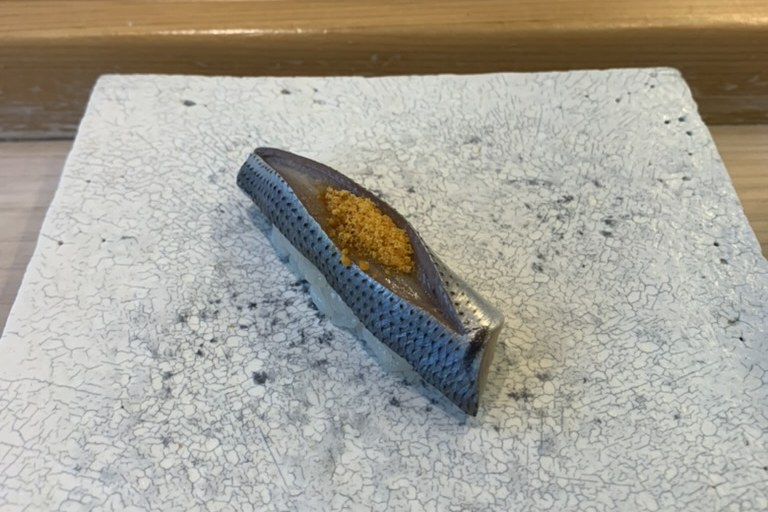
Kohada (gizzard shad), cured and scored, with a touch of grated ginger.
A deep-red bonito nigiri with a dark seam of skin on a white plate
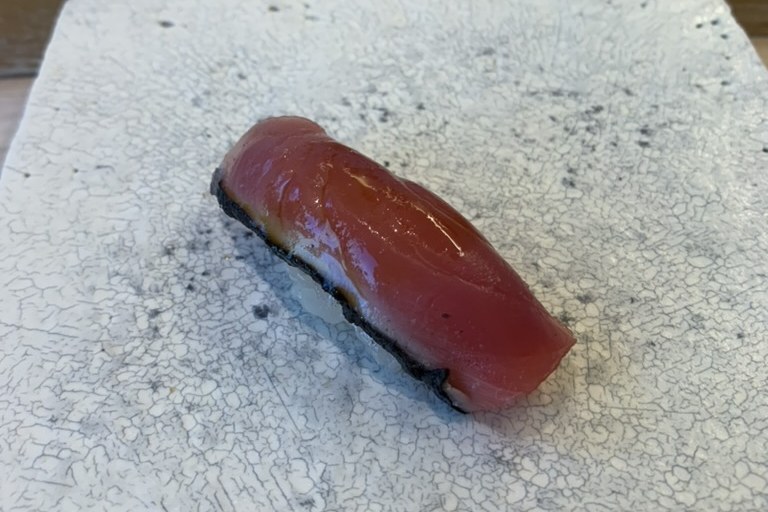
Katsuo (bonito) — deep red and clean, a dark seam of skin along the top.
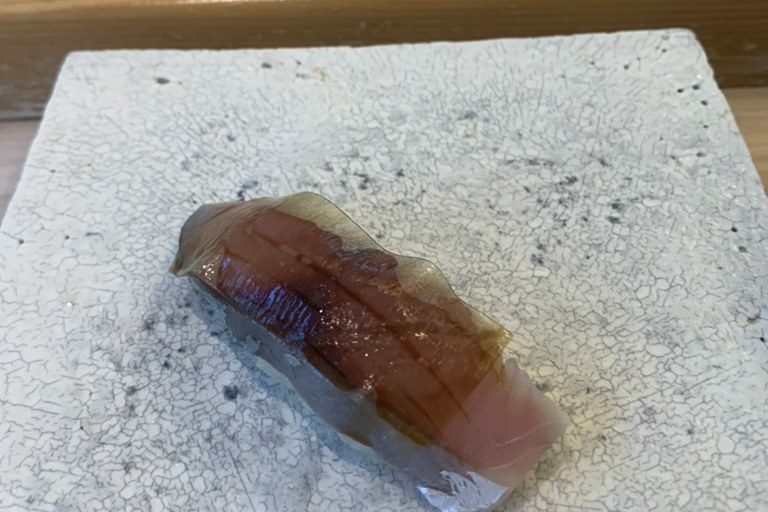
A cured mackerel nigiri with a translucent slice of kombu laid over it
Saba (mackerel), cured, with a translucent slice of kombu laid over the top.
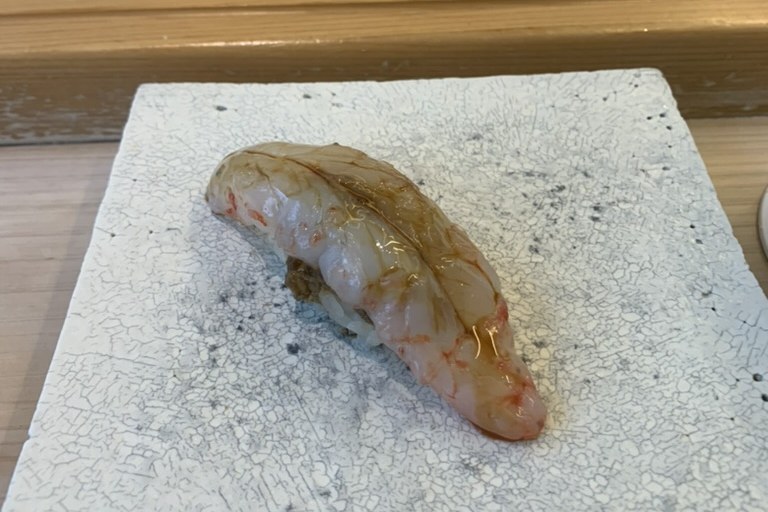
A large translucent botan shrimp draped over rice on a white plate
Botan-ebi (botan shrimp) — large, sweet, and almost jelly-soft.
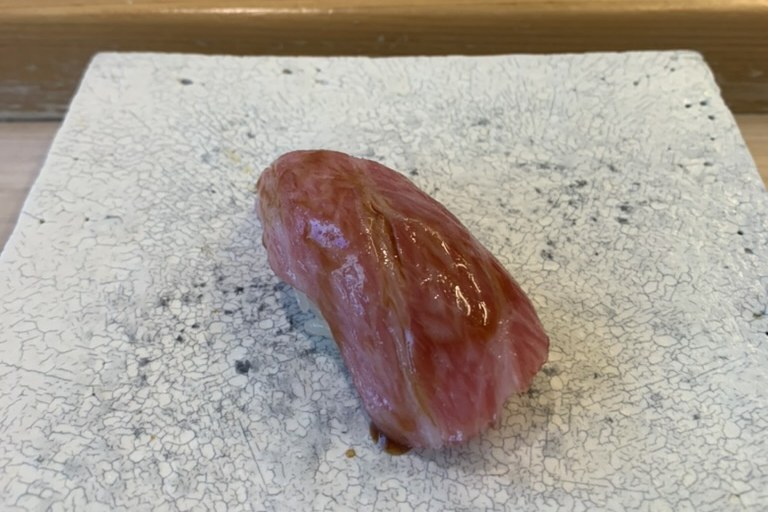
A heavily marbled otoro nigiri, pale pink with fat, on a white speckled plate
Ōtoro — the richest cut of the tuna's belly, marbled and melting.
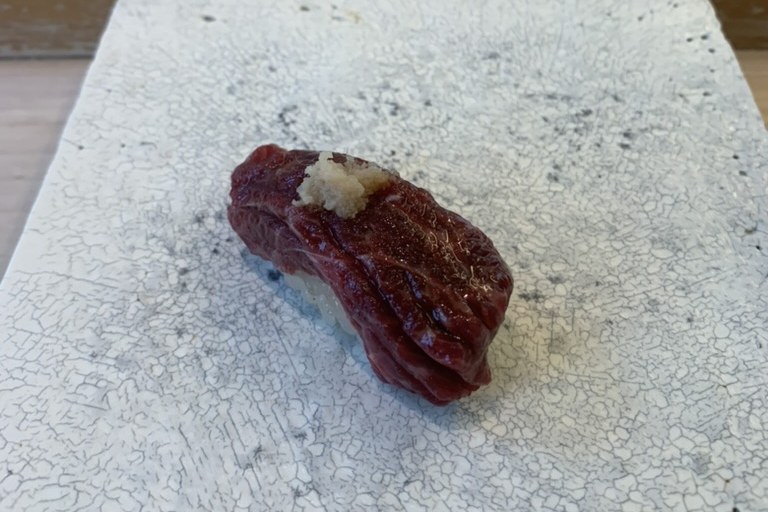
A dark red whale-meat nigiri topped with a little grated ginger on a white plate
Kujira (whale), deep and dark, lifted with a little grated ginger — a rare, old-school Edomae topping.
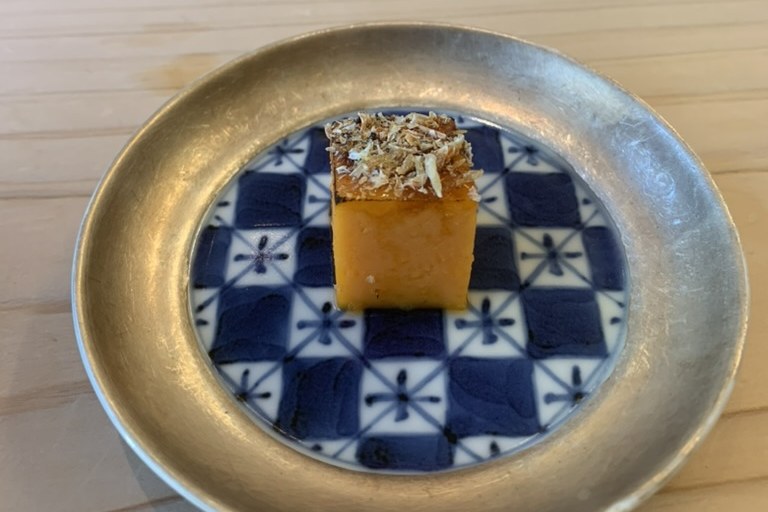
A dense orange cube of tamago topped with a savoury crumb on a blue-and-white patterned plate
Tamago to close — dense and cake-like, more confection than omelette, with a savoury crumb on top.

Worth the trip

Meal costs from around ¥40,000, but may subject to change. Note the house rule: the person who makes the booking must be the one who attends. For the setting alone — a hush of a counter two minutes from the Imperial gardens — it’s a memorable Tokyo meal; for what Namba does with temperature, a genuinely singular one.

Tips before visiting

Book through TableAll or Omakase.in (English, with a booking fee) or by phone. It is located at a corner of a shopping center - Hibiya Midtown, don’t get lost. The piece of sushi is relatively small, don’t get surpised.

Location
Tokyo Midtown Hibiya 3F, 1-1-2 Yurakucho, Chiyoda-ku, Tokyo
View on Google Maps →