Sushi Marufuku: a jukusei specialist in Tokyo's outlying district
Sushi Marufuku (鮨 まるふく) sits a minute or two from Nishi-Ogikubo station, out on the quieter western edge of Tokyo in Suginami — a long way, in feel, from the Ginza counters. Eight seats at a single slab of wood, a Michelin listing, and a Tabelog score in the high 3.7s. What sets it apart isn’t the room. It’s that this is an aged-sushi house: almost everything that reaches the rice has been deliberately rested.
The approach
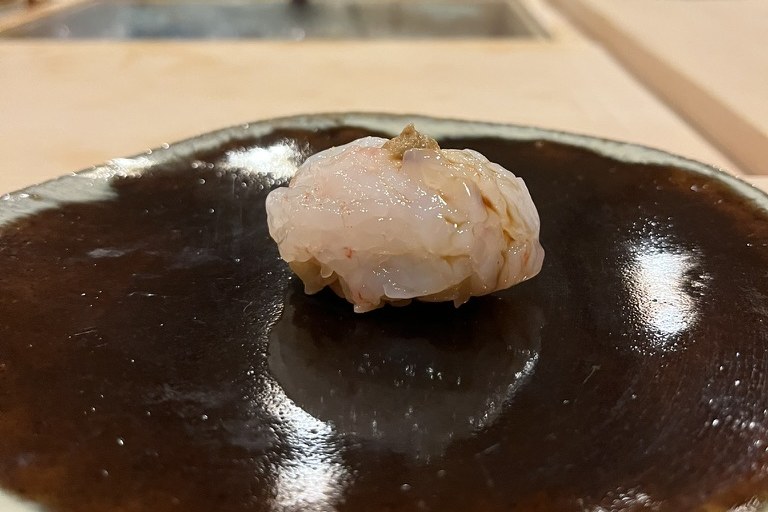
Chef Yutaka Isayama builds the whole counter around jukusei. Most neta are aged anywhere from one to three weeks; certain white fish — notably from the Goto Islands off Kyushu, bled and nerve-treated at the moment of the catch — are rested closer to a month. The point isn’t novelty. Aging trades the squeak of freshness for depth, a softer texture, and a faint wildness of flavour the same fish simply doesn’t have on day one. (For why fresh isn’t best, and what aging actually does to a fish, see jukusei.)
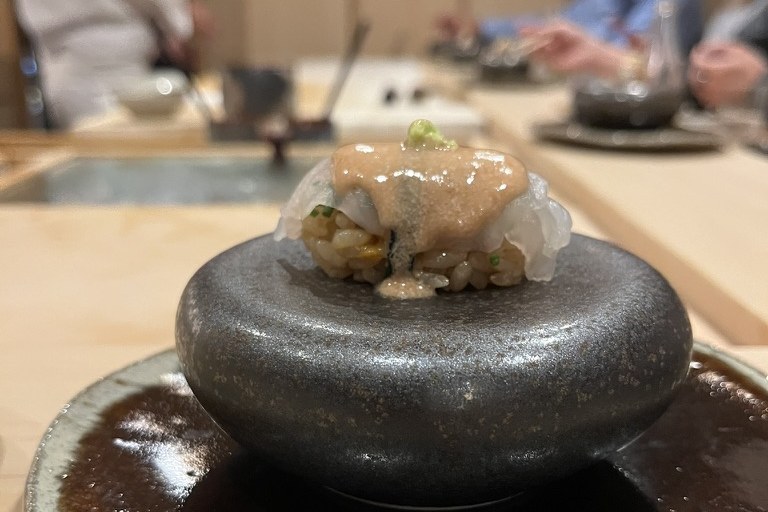
Because a long run of intensely aged toppings would tire the palate, Isayama threads tsumami — small cooked and dressed bites — between the nigiri, resetting the mouth before the next piece. It’s aged sushi served with a sense of pacing.
The sushi
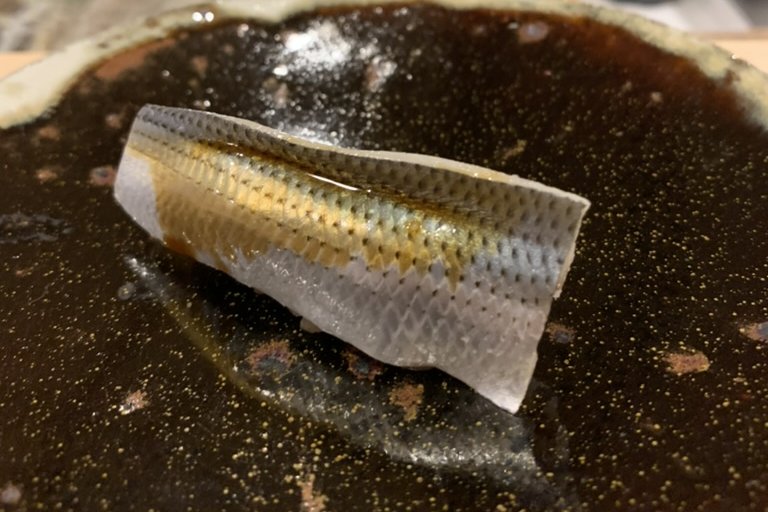
The signature is the kohada, cured and then aged well past the usual quick salt-and-vinegar — here rested nine days, the silver fish deepened and rounded rather than sharp. It’s the clearest illustration of the house style: a piece most counters serve bright and brisk, taken somewhere slower and more savoury. (On the cured silver fish generally, see hikarimono.)
Beyond the rice
The tsumami aren’t filler. Between the nigiri come the season’s luxuries — a warm bowl, something from the grill, the winter shellfish — each timed to reset the palate before the next aged piece.
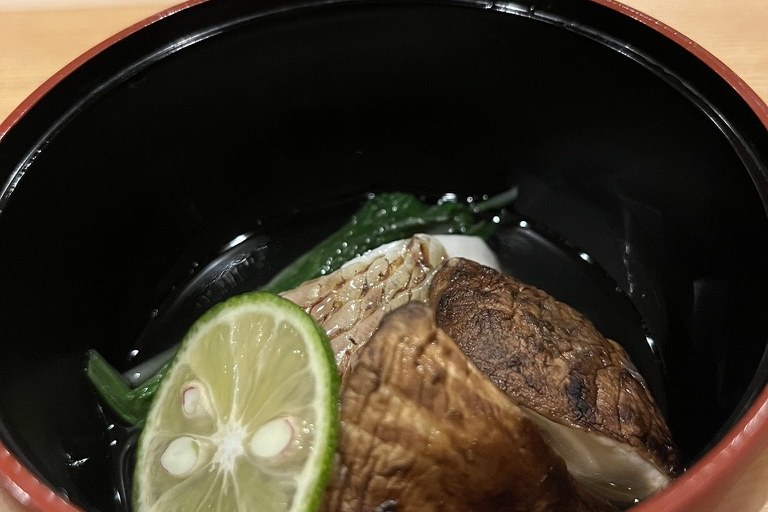
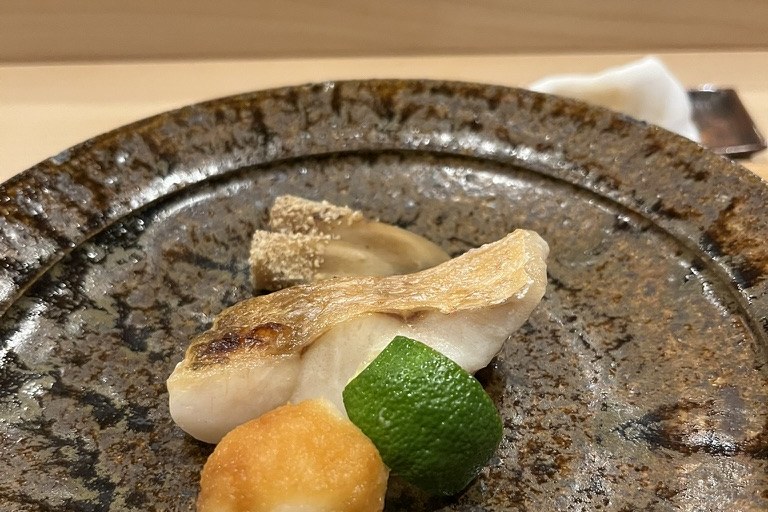
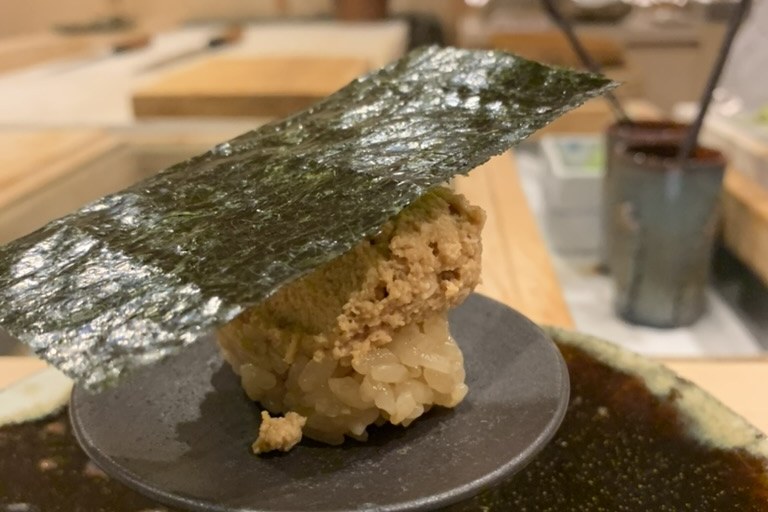
And in the cold months, the counter turns to crab.
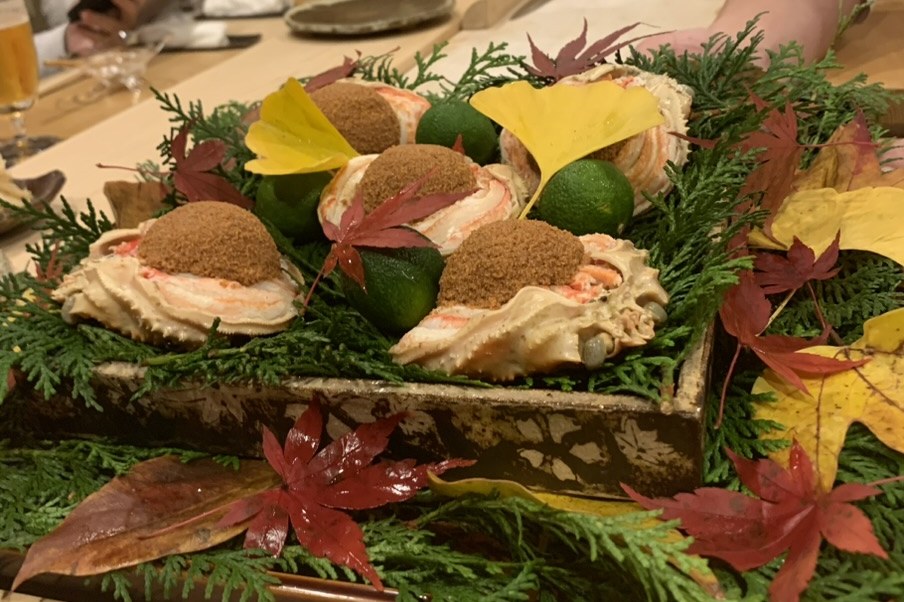
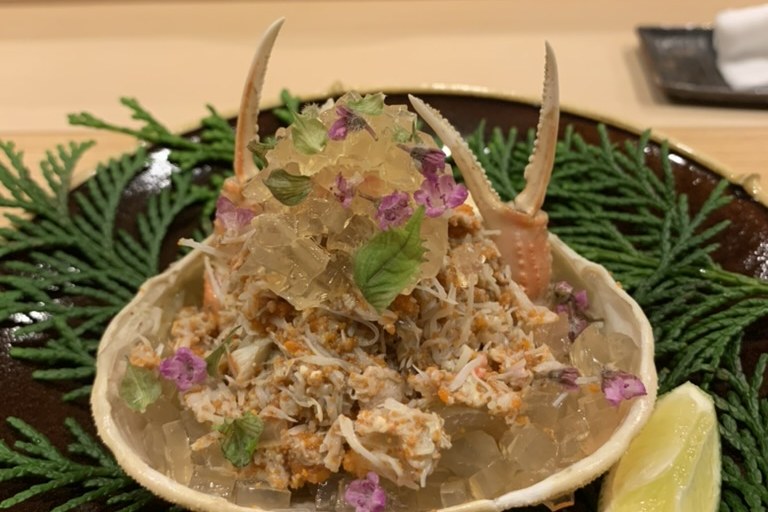
The sake
Drink here. The okami is a trained sake sommelier, and the list is chosen to stand up to all that aged, savoury fish — pours matched piece to piece if you let her lead. Aged sushi and good sake is one of the counter’s great pairings, and Marufuku takes both halves seriously. (More on the logic in sake pairing.)
Worth the trip
Dinner is an omakase of roughly ¥20,000–25,000 — reservation only, eight seats, no walk-ins. For anyone who wants to understand what jukusei actually tastes like, it’s one of the most focused places in Tokyo to find out — and far enough west that it’s a little easier to book than the central rooms.
Tips before visiting
The chef is a very extroverted person and keeps telling jokes about the dish. Feel free to interact with him.