Kinotomi: Setouchi-mae sushi, another chef with deep love of his hometown
Kinotomi (乙巳) opened in October 2025, a nine-seat counter on the ground floor of a small building a minute from Yotsuya-Sanchōme station. The name reads kinoto-mi (乙巳) — the sexagenary year the shop opened in — and the conceit runs deeper than the sign. This is a sushi-ya built not around Tokyo’s Toyosu market but around the Seto Inland Sea and Hiroshima; the chef calls the style Setouchi-mae (瀬戸内前), a deliberate play on Edomae. For a room only months old, it has already climbed past a Tabelog 3.6 — respectable, though worth reading for what that number does and doesn’t mean.
The idea: Setouchi-mae
Edomae — “in front of Edo” — named a style built on the fish of Tokyo Bay and the techniques that let it keep before refrigeration. Kinotomi keeps the technique and swaps the sea: the neta lean on the Seto Inland Sea and the wider Hiroshima catch, and the kitchen extends the regional idea to the shari itself, with rice and vinegar sourced from the same part of the country (why the rice is half the sushi). It’s less a gimmick than a coherent place-of-origin argument — that a counter can be world-class without routing everything through Toyosu, and that building around one region sharpens the sense of season.
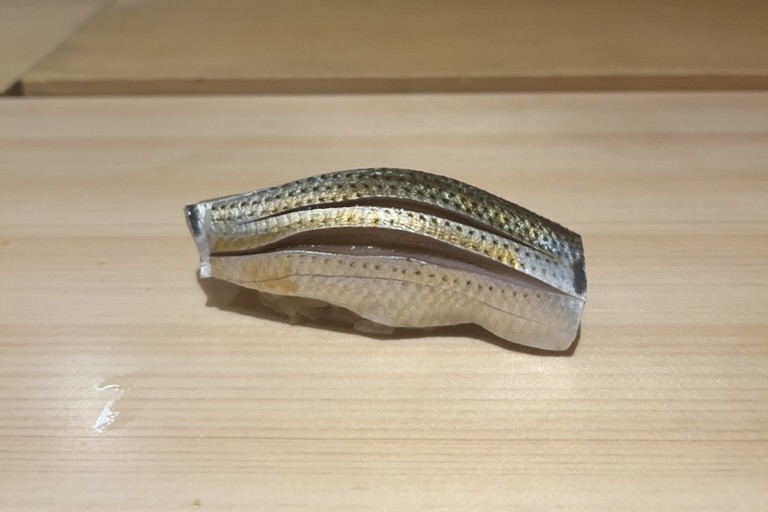
The chef works in classical Edomae technique but sources and seasons like a Hiroshima native — the tension between the two is the whole point of the meal. Nothing shows the technique more plainly than the kohada: a silver-skinned hikarimono, scored and cured the Edomae way, laid over the seasoned rice.
The format
Dinner is a single course, the Kinotomi kōsu (乙巳コース) at ¥19,800, run as roughly twenty small plates that alternate cooked and dressed tsumami with nigiri in the standard omakase rhythm (what that back-and-forth structure is, and why, in the anatomy of an omakase). Drinks are extra, as always — the course price is food only.
There’s also a genuinely affordable lunch: the Kinotomi lunch kōsu at ¥7,000 — eight pieces of nigiri around a chawanmushi, a roll or two and a few small dishes. At that price it’s one of the gentler ways into a serious Tokyo counter, and cheaper than a lot of the city’s entry-level omakase.
The signature
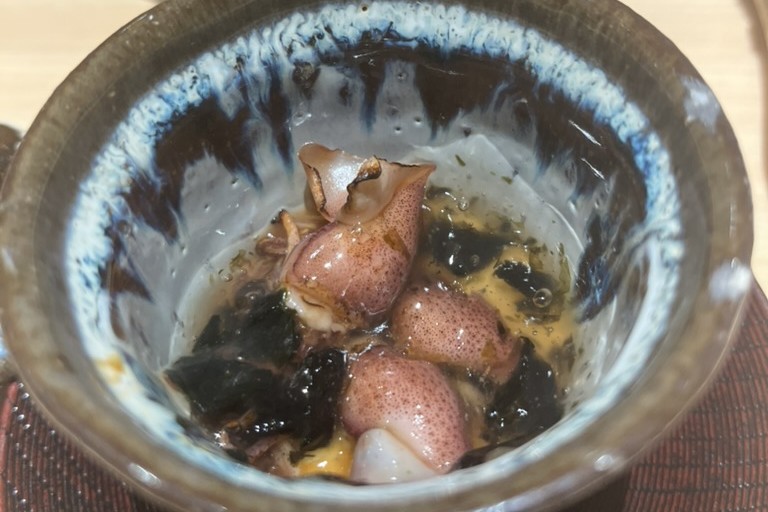
The dish the kitchen has become known for is a hotaru-ika (firefly squid, 蛍烏賊) chawanmushi — plump spring squid and wakame set into a delicate savoury custard. It’s the clearest statement of the idea: a classical Japanese preparation rebuilt around a Setouchi ingredient at its seasonal peak.
The room
The nine seats face a raised, stage-like counter in an earthen-plastered room — a layout that keeps the chef, and the changing temperature of each piece as it’s handed across, at the centre of the meal. On sushi built as much to watch as to eat, see theatre sushi; for a calmer counter in the same spirit, Nishiazabu Otake.
Worth the trip
For an omakase in the ¥20,000 range, before drinks, in a quiet nine-seat room a minute from the Marunouchi line, Kinotomi is one of the more accessible of Tokyo’s ambitious new counters — in both price and, for now, availability. The Setouchi-mae framing gives it a genuine identity rather than another variation on the Ginza template. Although the chef is not from a lineage of famous sushi places, he has deep understanding about how to pair the seafood with Shari. Go there before it gets super popular.