Is a ¥50,000 omakase worth it?
Fifty thousand yen — over three hundred dollars — for twenty-odd pieces of sushi and a few small dishes. Said plainly, it sounds absurd. But the answer to whether a meal like that is worth it is hiding in plain sight: the ingredients. At the top of the market a single neta can account for a startling share of the bill, and learning which ones do is how you read what you’re really paying for.
The luxury fish
Nodoguro (のどぐろ, akamutsu — the rosy seabass) is the famous one: a fatty, almost melting white fish from the Sea of Japan, and a good one runs to several thousand yen for a fish that yields only a few pieces. Do the arithmetic and one piece of nodoguro, on its own, can cost the chef more than ¥1,000 in raw fish.
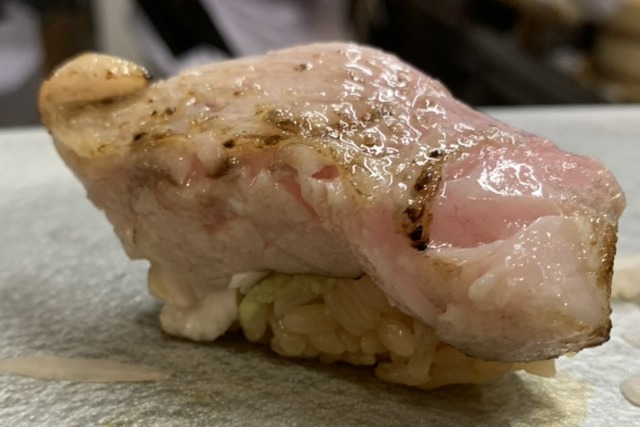
Kue (クエ, the longtooth grouper) is rarer still — the maboroshi no sakana, the “phantom fish.” Wild kue is so hard to land that in winter the Toyosu auction prices climb into the stratosphere as dealers fight over the few giant fish that come in; the flesh is buttery and rich enough that people compare it to toro. Most of Japan only ever meets it in a luxury hotpot, so a slice of wild kue as nigiri means the chef paid for something most counters never touch.
Kinki (きんき, the channel rockfish, kichiji) comes up from the cold deep water off Hokkaido and Sanriku: intensely fatty, meltingly sweet, and now scarce enough to be tightly limited. It’s so prized grilled that a fat kinki turned into sashimi or nigiri is, again, a kitchen spending where it didn’t have to.
The shellfish
Shellfish looks humble next to a grouper, but the great ones aren’t. Akagai (赤貝, the ark shell) is the classic Edomae example, and the benchmark comes from Yuriage (閖上) near Sendai, where the boats keep only the biggest shells and the supply has shrunk for years. A large, top-grade Yuriage akagai — crunchy, sweet, with that sea-air aroma rising at the back of the palate — is one of the pricier things in the box, and a chef who hands you a giant one is showing off on purpose. The same goes for a fat mirugai (gaper clam) or a live awabi (abalone) steamed for hours in its own liver sauce — luxuries priced like treasure since long before sushi was fashionable.
The tuna, the uni, and the season
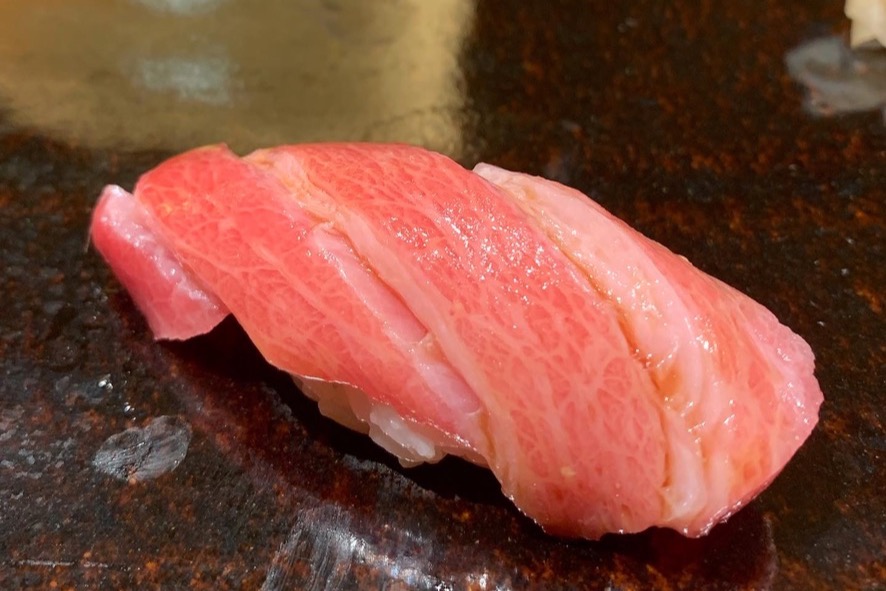
Start with tuna. Japanese bluefin — hon-maguro — is dear year-round, and the best ōtoro from a top dealer is bid up at the dawn auction. It’s prized enough that in summer, when the home fish is past its winter peak, even serious counters turn to Atlantic bluefin flown in from Boston or Ireland to keep the quality up. (Everything about the fish itself is in the tuna guide.)
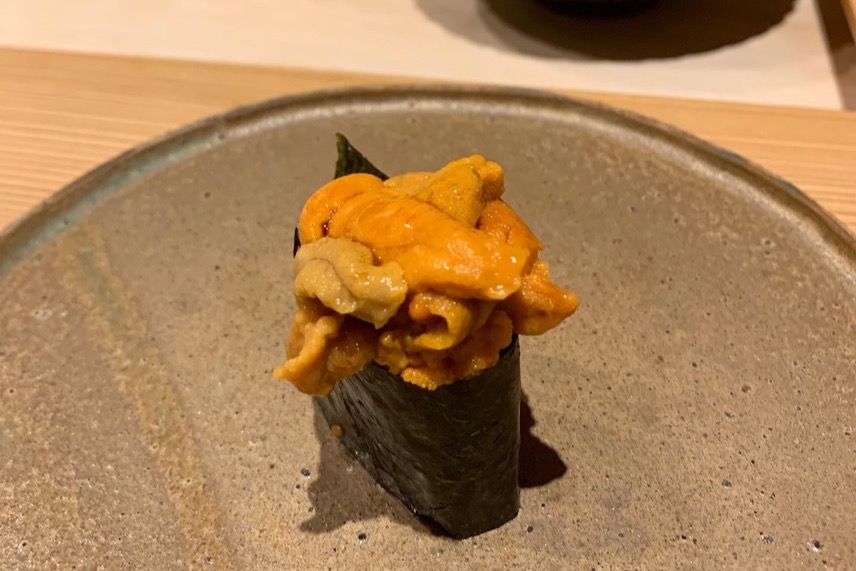
Then uni. Premium sea urchin was never cheap, but the last few years pushed it to records: through the pandemic and since, demand for the best Hokkaido roe — alum-free, packed in seawater, from the prized kelp beds — outran a supply squeezed by poor harvests and warming seas, while a weak yen made Japanese uni a bargain for overseas buyers on top. A single tray of top-grade ita uni can cost a restaurant five figures, and its price swings wildly from one batch to the next — the same chef’s uni can cost double from one week to another. Offered the good stuff, you are tasting one of the most expensive foods on earth by weight. (To read the grades, see the uni field guide.)
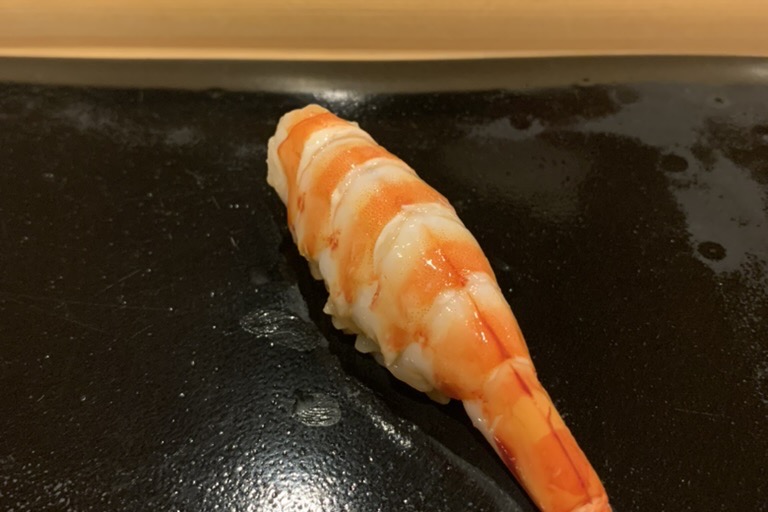
And the season piles on its own luxuries. A large live kuruma-ebi (車海老, tiger prawn) is a treat in its own right; winter brings shirako and snow crab; autumn brings matsutake — each one expensive the moment it appears.
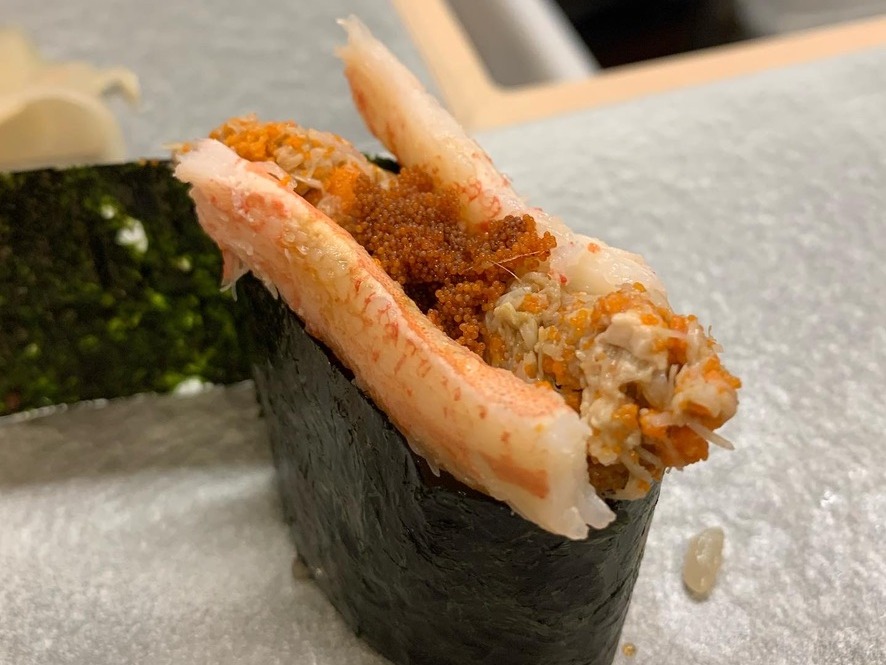
Crab is the clearest case of all: it isn’t only costly to buy, it’s costly in labour. Every strand of meat in a crab gunkan is picked from the shell by hand — long minutes of a chef’s time inside a single piece, on top of the price of the crab itself.
What you’re paying for
These are where a ¥50,000 bill goes. Strung together — genuine nodoguro and kue and kinki, a giant Yuriage akagai, a fat mirugai, peak uni, top-dealer toro — they’re a fortune in raw ingredients before the chef has pressed a single piece. Learn the expensive fish, look hard at what your chef sets down, and the question answers itself.