Fumakase: the $40 "omakase" counterfeit
The sign in the window said omakase, $40. In New York that reads like a steal — a word that means several hundred dollars in Tokyo, going for less than a decent brunch. I sat down expecting a bargain. What I got was a lesson in how a word can travel abroad and leave its meaning at the airport.
What $40 bought
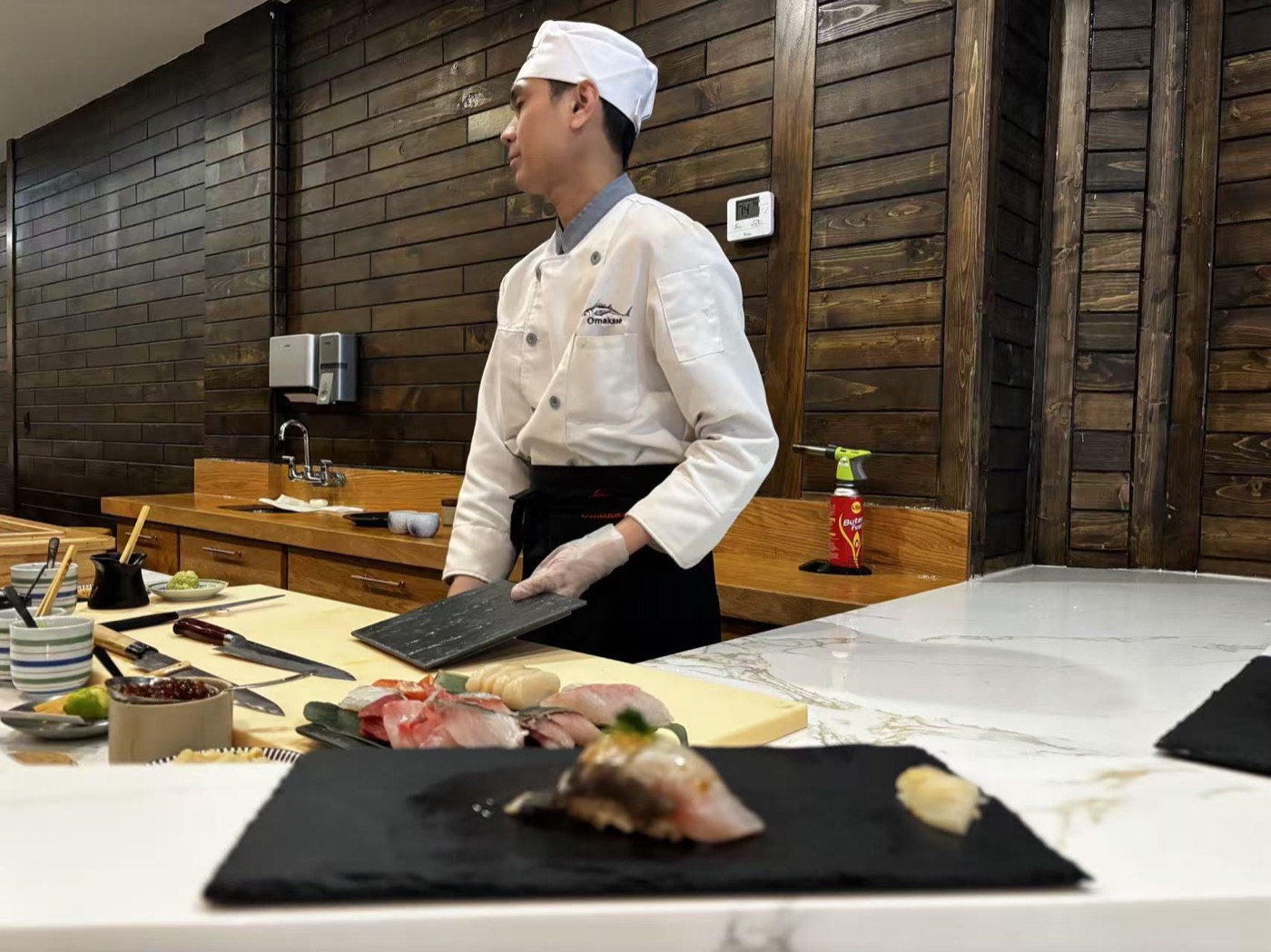
A narrow room, a queue at the door, the clear sense of two seatings an hour. No chef reading the counter — a server set down a wooden board with twelve pieces already decided, the fish pulled from a case where it had been cut and waiting. Salmon, then more salmon, a torched something under a stripe of spicy mayo, a tuna that had plainly been portioned hours earlier. Soy and wasabi on the side — the universal sign that you’re expected to dunk. Twenty minutes, door to door. It wasn’t bad. It just wasn’t omakase.
Where the word comes from
Fumakase isn’t a Japanese word at all — and that’s the whole tell. It’s Fuzhou (福州) fused with omakase: Fuzhou, the city in Fujian, China, whose immigrants staff and run an enormous share of New York’s cheap kitchens. Most of these $40 counters are Fujianese-owned; some are run by Southeast Asian operators. Where the cooks come from isn’t the point — the point is that almost none of them were ever trained to make sushi. More than once I’ve watched the man “behind the counter” assemble fish in blue plastic gloves, a thing you will never see at a real Edomae counter, where the itamae works with bare, freshly washed hands because he has to feel the rice.
Real omakase (お任せ) means “I leave it up to you” — a transfer of authority to the itamae (板前) at the counter. He decides what you eat based on what came in that morning, how the season is turning, the size of your appetite, and how the room is running. Two people sitting side by side get different pieces. The meal moves in a deliberate arc, each piece made and set down to be eaten in the next few seconds. Fumakase inverts every one of those things.
How to spot a fumakase
You don’t need to know the chef’s pedigree. The format gives itself away:
- A fixed price for a fixed count. “$40 for 12 pieces,” the same for everyone, every night. Real omakase has no set list — it depends, because the chef is choosing as he goes.
- Plastic gloves. A trained itamae shapes rice bare-handed, washing constantly, because he has to feel its warmth and give. Blue food-service gloves mean nobody ever taught him to.
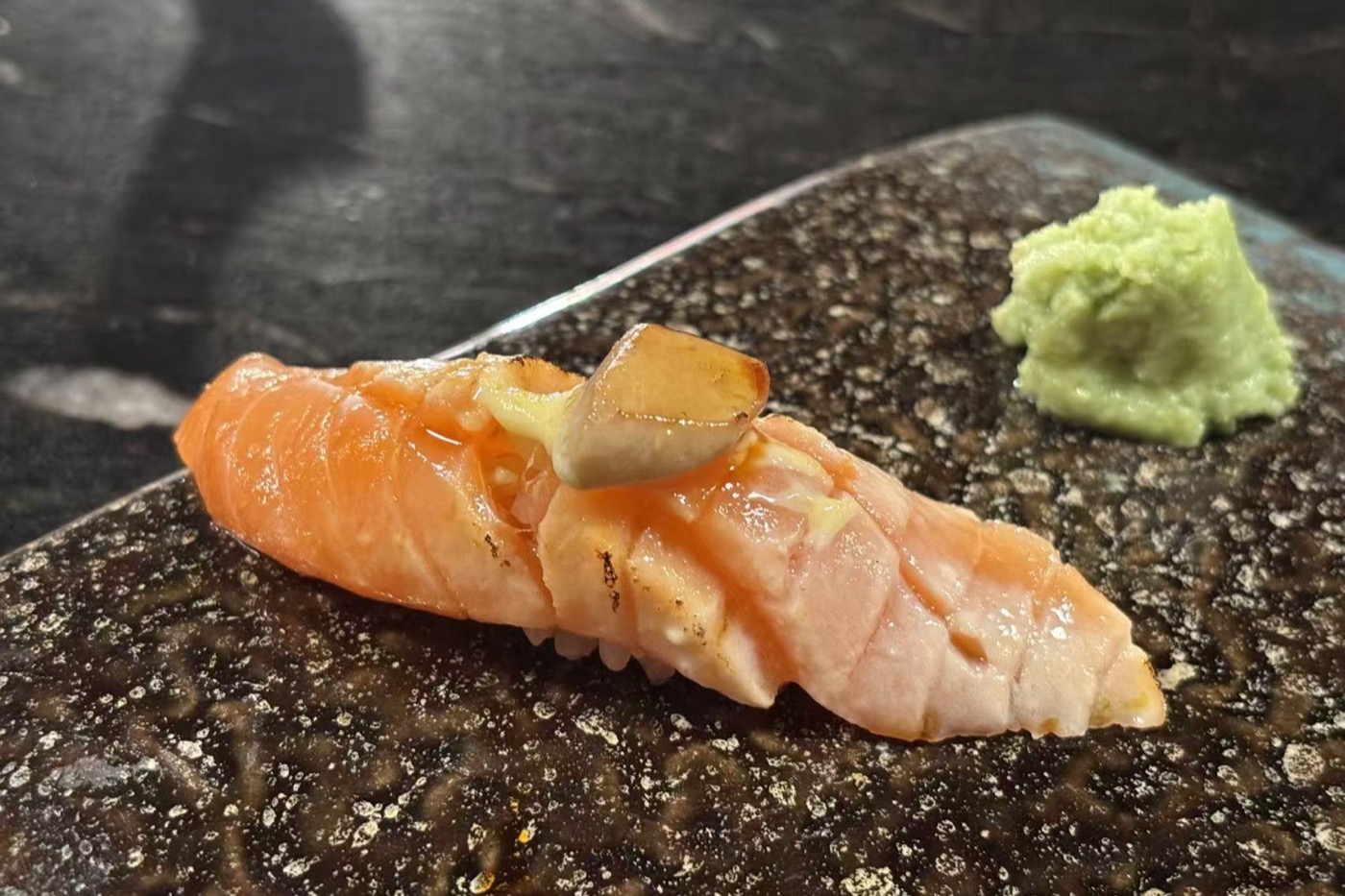
- Salmon, torch, sauce. Heavy on salmon, spicy mayo, eel sauce, a blowtorch for drama — the westernized playbook, not the Edomae one.
- Soy and wasabi on the side. You’re meant to assemble and dunk. At a real counter the seasoning is already built into the piece.
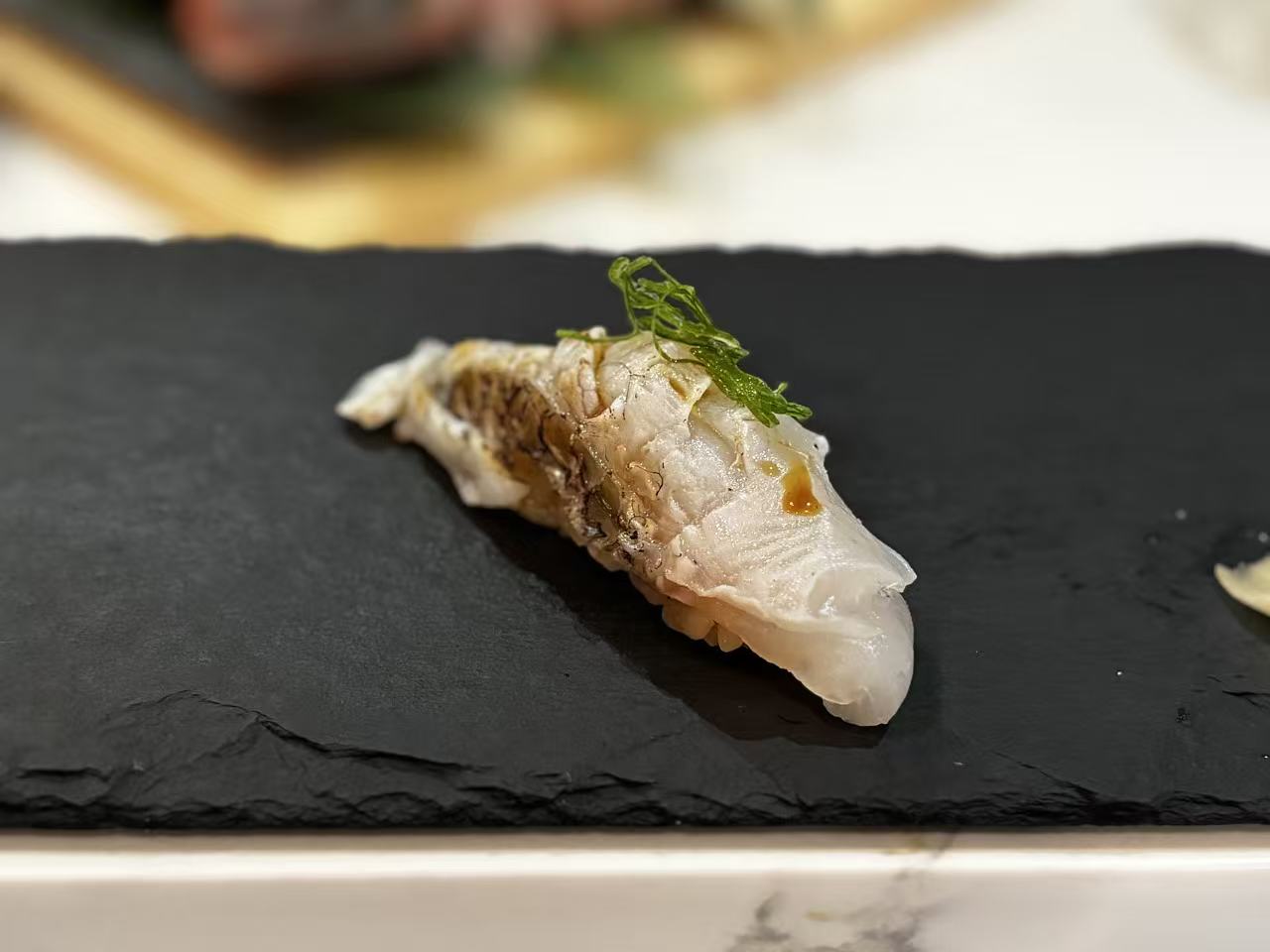
- A garnish on every piece. A trained chef puts yakumi — a dab of grated ginger, a few threads of scallion — only on the fish that need it: the assertive hikarimono like aji, sayori, and kohada, where it tames a stronger taste. Fumakase scatters a token pinch over every piece, copying the look without knowing what it’s for.
- It’s fast. The model is volume — turn the seats, keep the line moving. The economics only work if the meal is an assembly job.
Any one of these might be forgivable. Together they describe a different dish wearing a borrowed name.
It isn’t a scam — it’s a mislabel
Here’s where I want to be fair. Forty dollars for a tray of competently cut fish is not a rip-off; as a quick, cheap dinner it can be decent value, and I’d eat one again without complaint. And a cook’s background is genuinely not the issue — some of the best sushi anywhere is made by people who never grew up in Japan. What those chefs share is training, years of it, and that’s exactly the part fumakase skips. The real problem is a self-taught, gloved assembly line borrowing a word that’s meant to promise the opposite — and charging you for the association.
Calling it omakase promises something the format can’t deliver: a chef’s judgment, the day’s market, the timing, the relationship that makes even the bill personal. Pin that promise on a $40 conveyor of pre-cut fish and two things happen. People who don’t know better come away believing this is what omakase is — so when they finally sit at a real counter and see the prices, they feel cheated by the genuine article. And the word itself, slowly, gets hollowed out.
Why it isn’t Japanese
Strip omakase down and what’s left isn’t a price or a number of pieces — it’s trust. You give up control; the chef gives you his best judgment, course by course, tuned to the season and to you. That exchange is the whole tradition, and it doesn’t survive being pre-portioned into a case and run on a timer.
Fumakase keeps the syllables and throws away the substance — the same way the California roll kept the name “sushi” and quietly became its own American thing. There’s nothing wrong with the California roll, right up until someone tells you it is sushi, full stop. Fumakase is the omakase version of that sentence — and even the name gives it away: Fuzhou by way of New York, with Tokyo nowhere in it.
Eat it — just don’t believe it
I’m not telling anyone to skip the $40 board. Eat it, enjoy it, call it a good cheap dinner. Just don’t call it omakase, and — more importantly — don’t let it become your idea of one. The real thing is a different ambition entirely: a chef deciding, in front of you, what you should eat next, and being trusted to. When you’re ready for that, find a counter where no two guests are served the same meal. That’s where the word still means what it says.